What is the Yellow Trumpet Tree?
The Yellow Trumpet Tree, scientifically known as Tabebuia chrysantha, is an iconic species of the tropical and subtropical landscapes of America. This yellow-flowering tree is famous not only for its stunning beauty during the blooming season but also for its resilient wood. Known by many as the yellow tree, the Yellow Trumpet Tree blooms in a spectacular display of color that completely transforms the landscape, attracting visitors and photographers from around the world.
Origin and Geographical Distribution
The Yellow Trumpet Tree is native to South America and Central America, with a significant presence in countries such as Venezuela, Colombia, and Ecuador. Its habitat ranges from coastal regions to mountainous areas, adapting to various climatic environments. This adaptability has allowed the Yellow Trumpet Tree not only to survive but to thrive in a variety of conditions, becoming a vital element in the biodiversity of the areas where it is found.
Botanical Characteristics of the Yellow Trumpet Tree
Description of the Leaves
The leaves of the Yellow Trumpet Tree are compound and arranged alternately along the branches. Each leaf is made up of multiple small leaflets, dark green in color with a slightly toothed edge. These leaves not only add to the aesthetic beauty of the tree but also play a crucial role in photosynthesis, capturing sunlight to convert it into vital energy for the tree.
Trunk and Bark Structure
The trunk of the Yellow Trumpet Tree is sturdy and can reach impressive heights, typically between 65 and 100 feet. The bark, thick and rough in texture, ranges in color from pale gray to brown tones, providing essential protection against natural elements and pests.

The Yellow Flowers of the Yellow Trumpet Tree
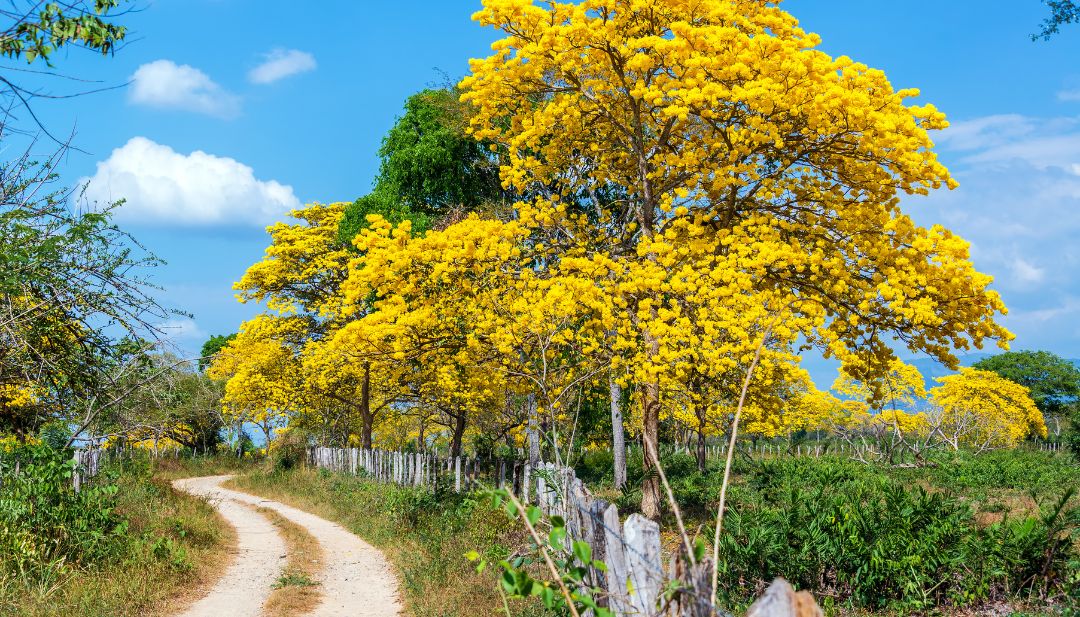
Perhaps the most distinctive feature of the yellow trumpet tree is its yellow flowers, which appear in lush clusters at the beginning of spring. Each flower has five vibrant petals that attract a variety of pollinators, including bees and butterflies, playing a fundamental role in the local ecosystem.

Fruits of the Yellow Trumpet Tree: Form and Function
The fruits of the Yellow Trumpet Tree are capsules that, when mature, open to release small, dense seeds. These fruits, in addition to their reproductive role, serve as a food source for local wildlife, especially birds that are attracted to these seeds.
The Root System of the Yellow Trumpet Tree
The root system of the Yellow Trumpet Tree is extensive and deeply anchored, allowing it to access groundwater during drought periods and stabilize the soil, preventing erosion. This characteristic makes the Yellow Trumpet Tree especially valuable for soil conservation and water regulation in its natural habitats.
Properties and Benefits of the Yellow Trumpet Tree
Ecological Benefits
The Yellow Trumpet Tree offers numerous ecological benefits that significantly contribute to the environmental health of its ecosystems. Due to its ability to stabilize the soil and improve water infiltration, it plays a crucial role in preventing erosion and conserving water. Additionally, during its spectacular flowering, it provides food and shelter to various wildlife species, promoting biodiversity and ecological balance.

Medicinal and Therapeutic Uses
Traditionally, various parts of the Yellow Trumpet Tree, especially its bark and leaves, have been used in folk medicine to treat various ailments. They are believed to have anti-inflammatory and analgesic properties, useful in the treatment of conditions such as arthritis and muscle pain. Additionally, recent research suggests that Yellow Trumpet Tree extracts may have potential as antioxidants and in boosting the immune system.
Applications in Carpentry and Construction
The wood of the yellowwood tree is highly valued in carpentry and construction due to its extraordinary hardness and durability. Resistant to rot and pests, it is ideal for outdoor uses, such as in the manufacture of garden furniture, flooring, and structures that require a robust and long-lasting material. Its beautiful texture and color also make it popular in the creation of artistic pieces and decorative objects.
Ecological Importance of the Yellow Trumpet Tree
Contribution to Biodiversity
The Yellow Trumpet Tree is essential for maintaining the biodiversity of the ecosystems where it is found. During its flowering, it not only beautifies the landscape but also provides a vital resource for pollinators, including numerous species of bees and butterflies, which depend on its flowers for nectar. Additionally, its seeds are an important food source for local wildlife such as birds and rodents, contributing to the food chain and the sustainability of many species.

Yellow Trumpet Tree in the Fight Against Climate Change
The Yellow Trumpet Tree plays a crucial role in mitigating climate change. Its broad canopy and robust root system help capture atmospheric carbon, storing large amounts of CO2. Additionally, due to its ability to improve soil structure and promote water retention, it helps regulate the local microclimate, providing a cooler and more stable environment.
Conservation of the Yellow Trumpet Tree
Current Conservation Status
Currently, the Yellow Trumpet Tree faces challenges that threaten its survival in some areas, including deforestation and land-use change. Although it is not classified as a critically endangered species, its population has declined in regions where its natural habitat has been severely fragmented or altered.
Conservation Strategies and Efforts
To preserve this iconic species, various conservation strategies are being implemented. These include the creation of protected areas, reforestation with native species, and environmental education programs that promote awareness about the importance of the yellow trumpet tree. Additionally, sustainable forestry initiatives are encouraged to allow the responsible use of forest resources, ensuring that future generations can enjoy and benefit from the yellow trumpet tree.
How to Identify a Yellow Trumpet Tree
Visual Identification Guide
Identifying a Yellow Trumpet Tree can be simple if certain distinguishing characteristics are known. Features to observe include its impressive height, which can reach up to 30 meters, its thick and rough bark ranging from gray to brown tones, and especially its bright yellow flowers that bloom in clusters at the beginning of spring. During the flowering season, the tree is almost completely covered in yellow, making it quite recognizable.

Comparison with Other Similar Species
- Tabebuia rosea (Pink Trumpet Tree): Although it also belongs to the genus Tabebuia, this tree is distinguished by its pink or white flowers. The shape of the flowers and the arrangement of the leaves are similar, but the flower color is a clear indicator of its identity.
- Cassia fistula (Golden Shower Tree): This tree also has yellow flowers, but they are smaller and hang in long, thin clusters, unlike the dense and compact clusters of the Yellow Trumpet Tree.
- Peltophorum pterocarpum (Copper Pod Tree): It has similarly yellow flowers, but these are accompanied by a distinctive red stigma in the center, making it easy to distinguish from the yellow trumpet tree. Additionally, the copper pod tree’s leaves are finer and more delicate.
- Acacia farnesiana (Sweet Acacia): Although it also has yellow flowers, they are considerably smaller and the tree overall is smaller in size. The leaves of the sweet acacia are finer, and the floral arrangement consists of small balls scattered along the branches.
Conclusion: The Role of the Yellow Trumpet Tree in Our Environment
The Yellow Trumpet Tree is not just another species in our forests and landscapes; it represents a symbol of beauty and resilience, playing crucial ecological roles that benefit numerous other species. Promoting the conservation of this tree is essential for maintaining biodiversity and fostering a broader ecological awareness among local and international communities. Protecting the Yellow Trumpet Tree and its natural environment not only preserves an unparalleled visual spectacle but also ensures a legacy of sustainability and respect for our planet.
Frequently Asked Questions
- How long does a yellow trumpet tree live?
The Yellow Trumpet Tree can live for several decades, in some cases reaching over 100 years of age, depending on the habitat conditions and the care it receives. - Does the Yellow Trumpet Tree bloom year-round?
No, the yellow trumpet tree typically blooms once a year, during the spring, when climatic conditions are optimal. Its flowering is intense but brief, lasting only a few weeks. - Can a Yellow Trumpet Tree be grown in a home garden?
Yes, it is possible to grow a yellow trumpet tree in a home garden if there is enough space, as it can reach a considerable height. It is important to ensure that the soil drains well and that the tree receives enough sunlight. - What measures can be taken to help conserve the yellow trumpet tree?
Supporting local reforestation, participating in environmental education programs, and avoiding indiscriminate logging are some effective measures to contribute to the conservation of the Yellow Trumpet Tree and its natural habitat.