What Is a Maple Tree and Its Ecological Importance
The maple tree, also known as the sugar maple (Acer saccharum), is a tree species noted for its impressive foliage that paints the landscape with vibrant colors, especially in autumn. Native to temperate climates, this tree not only beautifies its surroundings but also plays a crucial role in the ecosystem. Its ability to produce oxygen and improve air quality makes it indispensable for environmental health. Additionally, the maple tree is vital for biodiversity, providing shelter and food for various wildlife species.
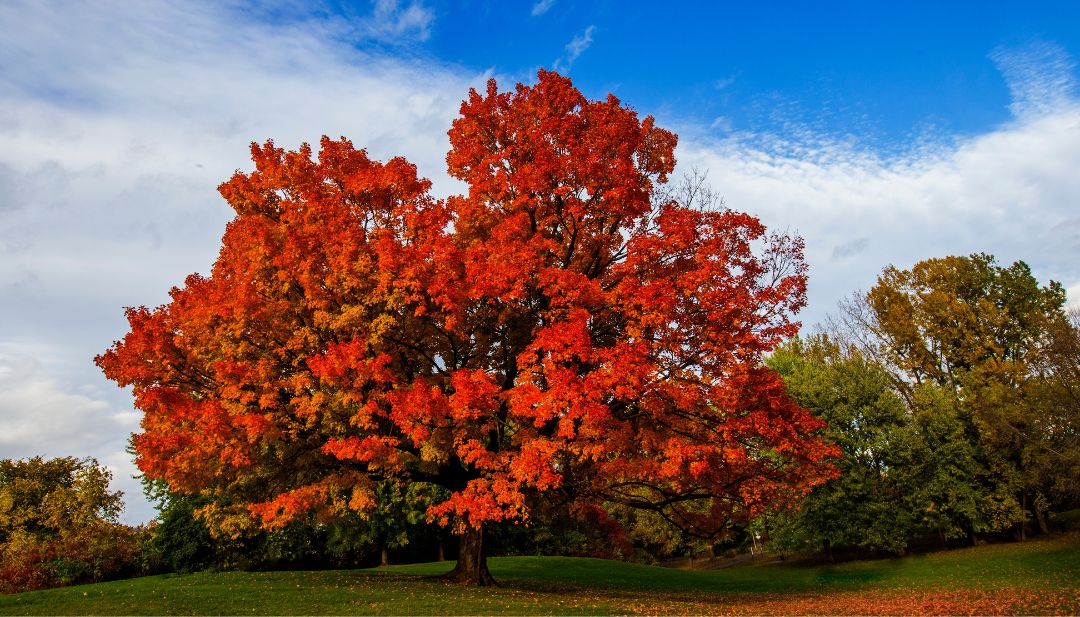
In addition to its ecological and aesthetic value, the maple tree, or sugar maple, holds deep cultural significance, with its leaf being the symbol that adorns the Canadian flag. This distinctive leaf not only represents Canada’s nature and environment but also symbolizes the country’s peace, tolerance, and unity.
Botanical Characteristics of the Maple Tree
The Leaves of the Maple Tree: Form and Function
The leaves of the maple tree are easily recognizable by their palmate shape and pronounced lobes. They are not only aesthetically attractive but also play a crucial role in photosynthesis, transforming sunlight into chemical energy. During the fall, these leaves change to bright shades of red, orange, and yellow, providing a visual spectacle as they prepare the tree for winter.

The Sugar Maple Trunk: Support and Strength
The trunk of the sugar maple is robust and capable of reaching impressive heights, making it a vital support structure for the tree. This strength not only bears the weight of the branches and leaves but also withstands adverse weather conditions. The trunk also acts as a main channel for transporting nutrients and water from the roots to the leaves.
The Flowers of the Canadian Tree: Reproduction and Pollination
The flowers of the Canadian tree are small and unobtrusive but vital for reproduction. They appear in spring and are usually yellow-green in color. These flowers attract a variety of pollinators, including bees and butterflies, which play a crucial role in pollination, ensuring the propagation of the species.

Maple Tree Fruits: Types and Dispersal
The fruits of the maple tree, commonly known as samaras, are small winged structures that facilitate wind dispersal. These fruits are essential for the species’ propagation, allowing the seeds to travel to distant locations, finding new sites to germinate and grow.
The Root System of the Maple: Structure and Adaptations
The root system of the maple is extensive and adapted to efficiently extract water and nutrients from the soil. The roots not only provide stability and support to the tree, but also facilitate symbiotic relationships with soil fungi, enhancing its ability to absorb essential nutrients, a process known as mycorrhization.
Properties and Benefits of the Maple Tree
Medicinal and Nutritional Properties of the Sugar Maple
- Natural Antioxidants: Maple sap and syrup contain numerous antioxidants that help combat free radicals and reduce oxidative stress in the body.
- Essential Minerals: Maple syrup is a rich source of minerals such as zinc and manganese, essential for strengthening the immune system and bone health.
- Anti-inflammatory Properties: Some compounds in the sugar maple have anti-inflammatory effects that may help alleviate conditions such as arthritis and other chronic inflammations.
- Anti-inflammatory Properties: Some compounds in the sugar maple have anti-inflammatory effects that may help alleviate conditions such as arthritis and other chronic inflammations.

Environmental Benefits of the Maple Tree
The maple tree is notable not only for its medicinal and nutritional uses, but also for its multiple environmental benefits. Its capacity to absorb large amounts of CO2 significantly contributes to the reduction of greenhouse gases. Additionally, the extensive root systems of the maple help prevent soil erosion and increase its fertility. Maple trees also play a crucial role in maintaining local biodiversity by providing habitat and food for a variety of animal species.

Identification and Care of Maple Trees
Identifying a maple tree and providing it with proper care is essential for its development and health. Maple trees are recognized by their distinctive palmately lobed leaves and vibrant fall colors. To properly care for these trees, it is essential to ensure sufficient space for their growth, water them regularly during dry periods, and perform preventive pruning to maintain their structure and prevent diseases.
How to Grow a Sugar Maple Tree Step by Step
- Choosing the right location: Select a spot that receives full sun or partial shade and has well-drained soil.
- Prepare the soil: Make sure the soil is loose and enriched with organic matter to facilitate root growth.
- Plant at the right time: The best time to plant a sugar maple is during the fall or early spring, avoiding temperature extremes.
- Plant the tree: Dig a hole twice as wide as the tree’s root ball and deep enough so the base of the trunk is level with the ground. Place the tree in the hole and backfill with the original soil mixed with compost.
- Watering: Water the tree generously after planting and maintain a regular watering schedule, especially during the early growth stages and periods of drought.
- Apply mulch: Place a layer of mulch around the base of the tree to help retain soil moisture, suppress weeds, and protect the roots from cold.
- Fertilization: Fertilize the tree during spring with a fertilizer designed specifically for trees, following the manufacturer’s instructions to avoid overfeeding.
- Prune when necessary: Prune dead or diseased branches during winter to promote healthy growth and maintain the shape of the tree.
- Regular inspection: Check the tree regularly for signs of diseases or pests and address any issues as soon as possible to prevent further damage.
Main Species of Maple Trees
The maple trees are known for their beauty and variety, with multiple species that vary in size, shape, and color. Here we highlight some of the most important and popular maple species:
- Sugar Maple (Acer saccharum): Renowned for its sap, which is used to make maple syrup. It is native to the eastern United States and is valued for its stunning fall foliage, with leaves ranging from bright yellow to deep red.
- Red Maple (Acer rubrum): Another prominent tree in North America, it is also commonly known and valued for its vibrant autumn colors and adaptability to different environments, making it popular in many landscaping and reforestation projects.
- Silver Maple (Acer saccharinum): Known for its resilience and ability to grow in a wide range of soils, this tree is often used in urban areas. Its leaves have a distinctive silver color on the underside.
- Japanese Maple (Acer palmatum): Highly valued in gardening for its varied forms and sizes, as well as its spectacular foliage that changes color throughout the seasons. It is ideal for smaller gardens or as a focal point in landscaping.
- Norway Maple (Acer platanoides): This tree is known for its robustness and ability to adapt to various urban environments. It provides dense shade and has leaves that turn a vibrant golden yellow in autumn.
These species of maple tree are just a sample of the diversity offered by these magnificent trees. Each type of maple has its own unique characteristics that make it special, whether for syrup production, ornamental purposes, or enhancing urban and rural landscapes.

Conclusions on the Impact and Future of the Maple Tree
The maple tree has proven to be more than just a component of the natural landscape. Its ability to adapt to diverse climates and its contribution to biodiversity and air quality improvement make it indispensable in the fight against climate change. As ecological awareness grows, it is essential to promote the conservation of these trees not only for their beauty or economic value, such as in syrup production, but also for their crucial role in forest ecosystems. The future of the maple tree will largely depend on our efforts to protect these natural resources and educate communities about the importance of their preservation.
Frequently Asked Questions
How long can a maple tree live?
A maple tree can live between 100 and 400 years, depending on the species and environmental conditions.
Do all maple trees produce syrup?
No, although several types of maples produce usable sap, the sugar maple is the most efficient and commonly used for maple syrup production.
How can I identify a maple tree?
Maple trees are easily identified by their distinctive palmate leaves, with five points or lobes. Additionally, their leaves change to vibrant colors in the fall.
What care does a maple tree require?
Maple trees require well-drained soil, adequate exposure to sun or partial shade, and regular watering, especially during dry periods or when they are young.