Introduction to Crescentia cujete
In the vast plant kingdom, the calabash tree, scientifically known as Crescentia cujete, stands out for its unique beauty and numerous uses. This species, emblematic of tropical regions, not only enhances the landscapes where it grows but also plays a crucial role in local ecosystems and cultures.

Origin and distribution
The calabash tree is native to Central America and the Caribbean, but its adaptability and value have promoted its spread to other parts of the global tropics. Today, it is possible to find these calabash trees in tropical areas of South America, Africa, and Asia, where they have been perfectly integrated into local ecosystems. This plant prefers warm and humid climates, often growing near rivers and streams, facilitating its proliferation and dispersal.
Ecological Importance
The ecological importance of the Calabash Tree (Crescentia cujete) is vast. In addition to contributing to the biodiversity of the regions where it grows, this tree plays an essential role in the lives of numerous animal species. The calabash fruits, produced by this tree, serve as food for various birds and mammals, while its foliage provides refuge to a wide range of organisms. Additionally, the calabash tree is used in agroforestry systems, promoting sustainable agricultural practices and helping to maintain soil health. The tree’s ability to coexist with agricultural crops and its contribution to biodiversity conservation make it a valuable ally in the fight against climate change.
Distinctive Characteristics of the Calabash Tree
The calabash tree is renowned not only for its resilience and adaptability but also for the unique characteristics that set it apart from other tree species. From its structure to its fruits, every aspect of this tree has a story to tell and a role to play in its environment.
Leaf
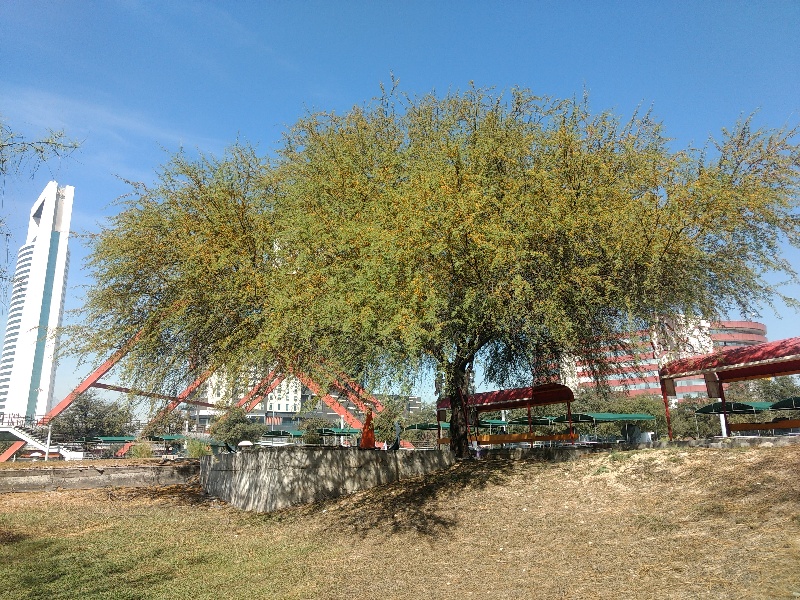
The leaves of the calabash tree are small, oval or lance-shaped, with smooth edges and a glossy dark green surface. They are arranged alternately along the branches, creating an attractive visual pattern and providing effective shade. This arrangement not only maximizes sunlight capture for photosynthesis but also minimizes water loss, a crucial adaptive trait for survival in warm and dry environments.

Trunk and bark
The trunk of the calabash tree is short and sturdy, supporting a wide canopy that spreads in several directions. The bark, with a rough texture and grayish color, is distinctively thick, which helps the tree withstand high temperatures and protect itself from wildfires. This trait is especially valuable in the ecosystems where this native tree grows, demonstrating its ability to adapt to the most adverse conditions.
The Flower of the Calabash Tree
The beauty of the calabash tree is not limited to its impressive fruits and its robust presence; its flowers also play a starring role in the appeal of this species. The flower of Crescentia cujete, pale green or soft yellow in color, emerges directly from the trunk and thick branches, a botanical phenomenon known as cauliflory. This trait is not only peculiar and fascinating from an aesthetic point of view but is also an evolutionary adaptation designed to facilitate pollination by bats and certain nocturnal birds.

Roots
The roots of the calabash tree or gourd tree are deep and extensive, allowing it to access underground water sources during drought periods. This root network not only supports the tree but also contributes to soil stability, preventing erosion and promoting water infiltration. This feature highlights the importance of Crescentia cujete in the conservation of its natural habitat.

Fruits and Gourds: Uses and Properties
Perhaps the most emblematic feature of the calabash tree is its fruit, the calabashes, which have been used by ancestral cultures up to the present day in a variety of applications. These fruits, ranging from spherical to oval in shape with a hard, woody surface, are hollowed out and dried to create natural containers used in cooking, crafts, and as musical instruments. Beyond their practical utility, the calabashes have medicinal properties; tea made from the bark and leaves is believed to have antioxidant and anti-inflammatory effects. This multifaceted nature makes the calabash tree an inexhaustible source of resources for the communities that coexist with it.
Care and Growth of the Calabash Tree
The cultivation and maintenance of the calabash tree do not require extremely complex care, thanks to its remarkable resilience and adaptability. However, to ensure optimal and sustainable development of these trees, it is essential to understand and provide the most suitable conditions for their growth.

Optimal growth conditions
The ideal conditions for the growth of Calabash tree include a warm and humid climate, typical of tropical and subtropical regions. This tree prefers full sun exposure and grows best in well-drained soils, although it shows a remarkable ability to adapt to different soil types. It is drought-tolerant thanks to its deep root system, but moderate watering will promote healthy growth during the early stages of development.
Reproduction and planting
The reproduction of the calabash tree is generally carried out through seeds. These should be sown shortly after collection to maintain their viability. Germination can take several weeks, requiring patience and constant care. For planting, it is advisable to choose a location that receives direct sunlight and to prepare the soil with organic fertilizers to enrich the nutrients available for the young tree. The spacing between plants should be sufficient to allow the full development of their canopy and root system, thus promoting healthy and robust growth.
Environmental Benefits and Sustainability
The calabash tree is not only valued for its beauty and usefulness but also for the numerous environmental benefits it provides, significantly contributing to the sustainability of the ecosystems where it is found.
Contributions to biodiversity
The calabash trees are essential for biodiversity conservation in tropical regions. By providing habitat and food for various animal species, these trees help maintain ecological balance. Birds, in particular, benefit from calabash trees as a food source and nesting sites, while the roots and dense canopy offer shelter to multiple organisms, from soil microorganisms to small mammals.
Use in reforestation projects
Due to its resilience and rapid adaptation, the calabash tree is an excellent choice for reforestation and degraded habitat restoration projects. Its ability to grow in adverse conditions makes it ideal for the recovery of eroded soils and reforestation of areas affected by deforestation. Furthermore, its use in agroforestry systems promotes more sustainable agricultural practices, creating a balance between agricultural production and nature conservation. This synergy between the Crescentia cujete and the ecosystems represents a prominent model of how plant species can contribute to environmental sustainability and human well-being.

The Calabash in Culture and Economy
The calabash tree, beyond its environmental benefits and sustainability, holds a special place in the culture and economy of local communities. The calabash fruits from this tree have been used since ancient times to create a variety of utilitarian and artistic objects, deeply integrating into the traditions and way of life of numerous cultures.
Jícara and Gourd Crafts
Handicrafts made from calabash gourds are a clear reflection of the cultural and artistic richness surrounding the calabash tree. These natural containers are transformed by local artisans into beautiful works of art, including vessels, bowls, lamps, and even musical instruments, each with unique designs that reflect the cultural identity of their creators. The technique of working with calabash gourds is passed down from generation to generation, thus preserving traditions and promoting respect for nature.

Impact on the local economy
The production and sale of crafts made from calabash and gourd represent an important source of income for many local communities, driving the economy and promoting sustainable development. These products are highly valued in both local and international markets, not only for their beauty and originality but also for their ecological and sustainable nature. The cultivation of the calabash tree and the crafting of products from its fruits encourage job creation and offer a viable economic alternative for rural communities, thus contributing to poverty reduction and strengthening the local economy.
How are calabash bowls made?
The process of transforming the fruits of the calabash tree into useful and decorative crafts is a traditional art that has been practiced for generations. Below, we explore the basic steps involved in creating calabash gourds, from harvesting to the final product:
- Harvesting: The calabash fruits are harvested directly from the tree when they have reached full maturity.
- Cleaning: They are carefully cleaned to remove any residue from the surface.
- Cut: Using specific tools, the calabash is cut in half or shaped as desired.
- Hollowing out: The fibrous interior and seeds are removed to leave a hollow shell.
- Drying: The hollowed halves are left to dry in the sun or in a well-ventilated place.
- Decoration: Once dried, calabash gourds can be carved, painted, or decorated according to local tradition or the artisan’s creativity.
This process not only demonstrates the skill and creativity of the artisans but also highlights the deep connection between local communities and their natural environment. For a more detailed look at the process, we invite you to watch the following video:
Medicinal properties of the calabash tree
The calabash tree is not only valuable for its practical and aesthetic uses but also for the medicinal properties attributed to it, which have been utilized by various cultures throughout history.
Traditions and medicinal uses
Traditionally, different parts of the calabash tree, including the leaves, bark, and fruits, have been used in folk medicine to treat a wide range of ailments. It is believed that tea made from the tree’s bark has anti-inflammatory and pain-relieving properties, being used to alleviate general aches and discomfort. Likewise, the leaves have been applied in poultices to treat skin problems, such as infections and fungal conditions, reflecting the rich medicinal tradition associated with this species.
Conservation of the Calabash Tree
Despite its resilience and adaptability, the calabash tree faces various threats that endanger its survival and that of the ecosystems that depend on it.
Challenges and threats
Deforestation, agricultural expansion, and climate change represent the main threats to the calabash tree. Habitat loss not only reduces the populations of these trees but also affects the biodiversity associated with them, including numerous species of flora and fauna that depend on this tree for food and shelter.

Conservation Strategies
To address these challenges, it is crucial to implement conservation strategies that include habitat protection, reforestation with native species such as the jicaro tree, and the promotion of sustainable agricultural practices. Environmental education and fostering ecological awareness among local communities and society at large are essential to ensure the preservation of this valuable species.
Conclusions
The calabash tree is a species of great ecological, cultural, and economic value, whose medicinal properties are beginning to be supported by science. Its conservation is vital not only to maintain the biological diversity of tropical ecosystems but also to preserve the cultural heritage and livelihoods of many communities. Promoting ecological awareness and developing sustainable management and conservation strategies are essential steps to ensure that future generations can continue to benefit from this invaluable natural resource.