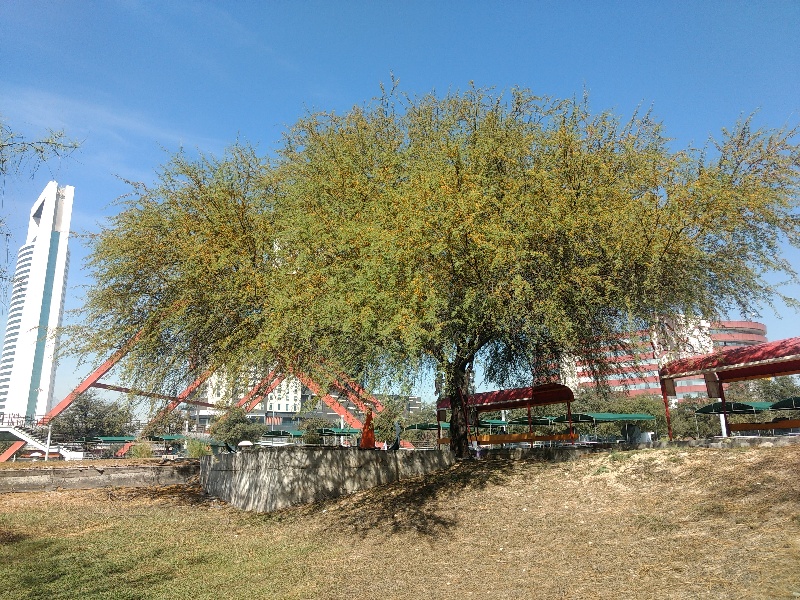
The huisache, scientifically known as Vachellia farnesiana (formerly Acacia farnesiana), is one of the most emblematic shrubs or small trees of the arid and subtropical regions of the world. Although its origin lies in the American continent, its remarkable adaptability has allowed it to naturalize on practically every continent, from the southern United States and Mexico to Australia and the Mediterranean basin.
This specimen is recognized for its extreme drought resistance, its delicate foliage, and especially for its spectacular yellow blooms that fill the air with a sweet and penetrating fragrance. In this article, we will examine the botanical properties, industrial uses, and ecological importance of this giant of the shrubland.
Taxonomy and the Change of Scientific Name
For decades, this tree was classified within the genus Acacia. However, recent phylogenetic studies have reclassified the species as Vachellia farnesiana.
The common name “Huizache” comes from the Nahuatl huizachin, which means “the one that has many thorns“, a very accurate description of its defensive morphology. In other regions, it is known as spiny mimosa, sweet acacia, or Constantinople mimosa, reflecting its broad global presence.
Blooming: The Spectacle of the Little Yellow Balls
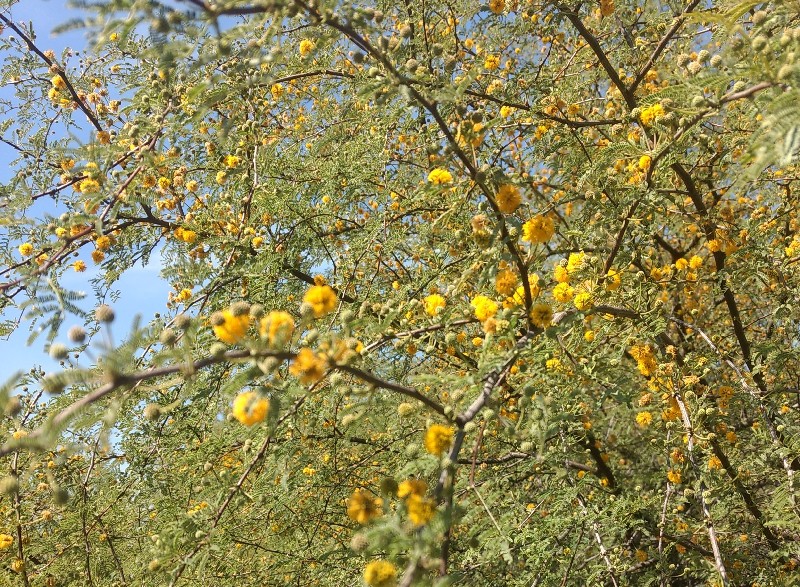
One of the most fascinating features of the Huisache is its flowering stage, which typically occurs in late winter and early spring.
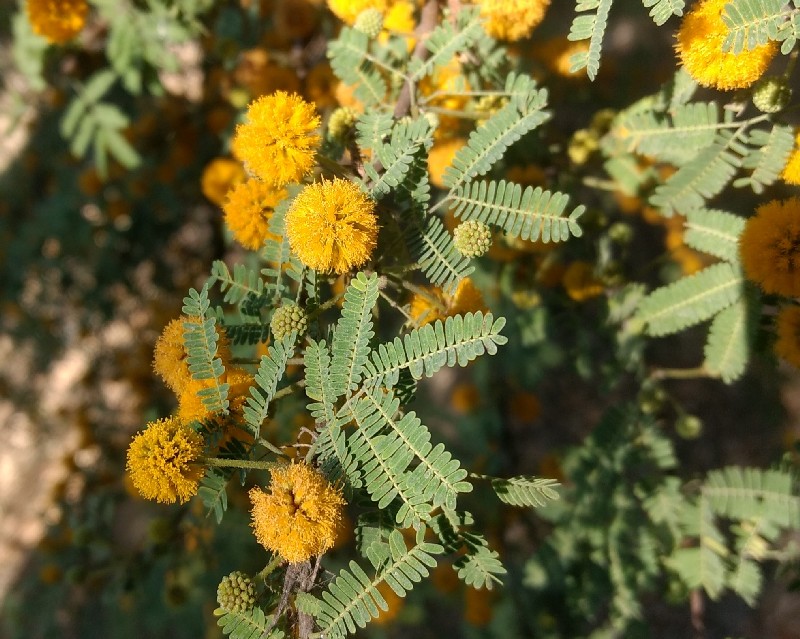
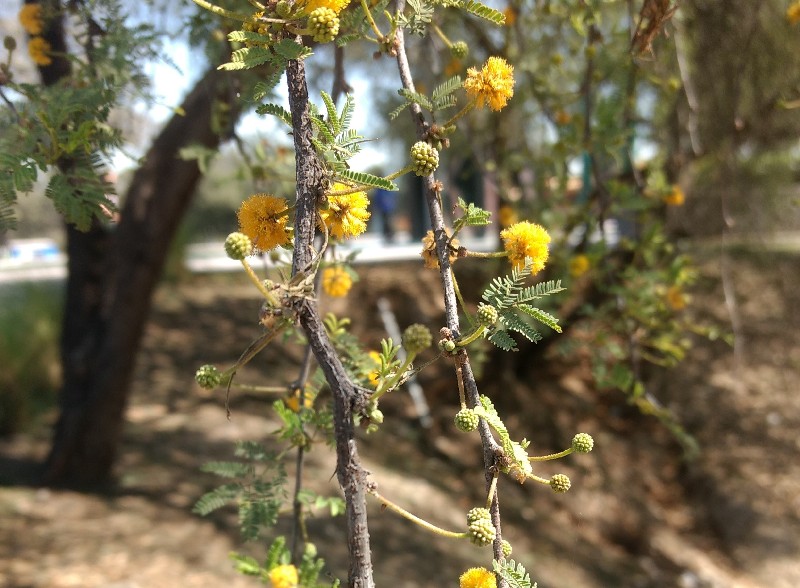
- Inflorescences: The flowers are grouped into globular heads of a vibrant yellow color, measuring approximately 1 to 1.5 cm in diameter.
- Aromatic Potential: Unlike other trees in its environment, the huisache (sweet acacia) produces an extremely pleasant and sweet aroma. This characteristic has been utilized by the perfume industry, especially in Europe, where the essence known as “Cassie” is extracted to craft luxury fragrances.
- Pollinator Attraction: Its massive blooming is not only of aesthetic or industrial value; it is a critical source of nectar for bees and other pollinators during times when few trees are active.
Habitat and Climate Resilience
The huizache (sweet acacia) is a quintessential pioneer species. It has the ability to colonize degraded, eroded soils or those with low nutrient levels, making it an ally in ecosystem recovery.
It naturally grows in climates where rainfall is scarce and temperatures can be extremely high. Its metabolic system allows it to close its stomata during the hottest hours to prevent water loss, maintaining its vitality where other species would perish.
It prefers well-drained soils and full sun exposure. It is commonly found in vacant lots, hillsides, and as part of thorny shrublands, where its presence helps fix nitrogen in the soil, improving fertility for future generations of plants.
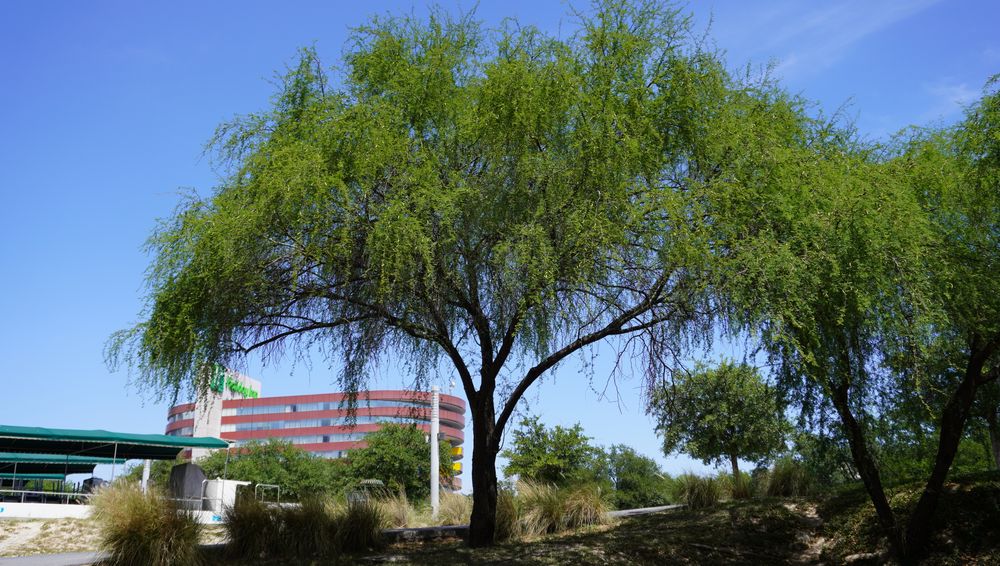
Anatomy of the Huisache: A Design for Survival
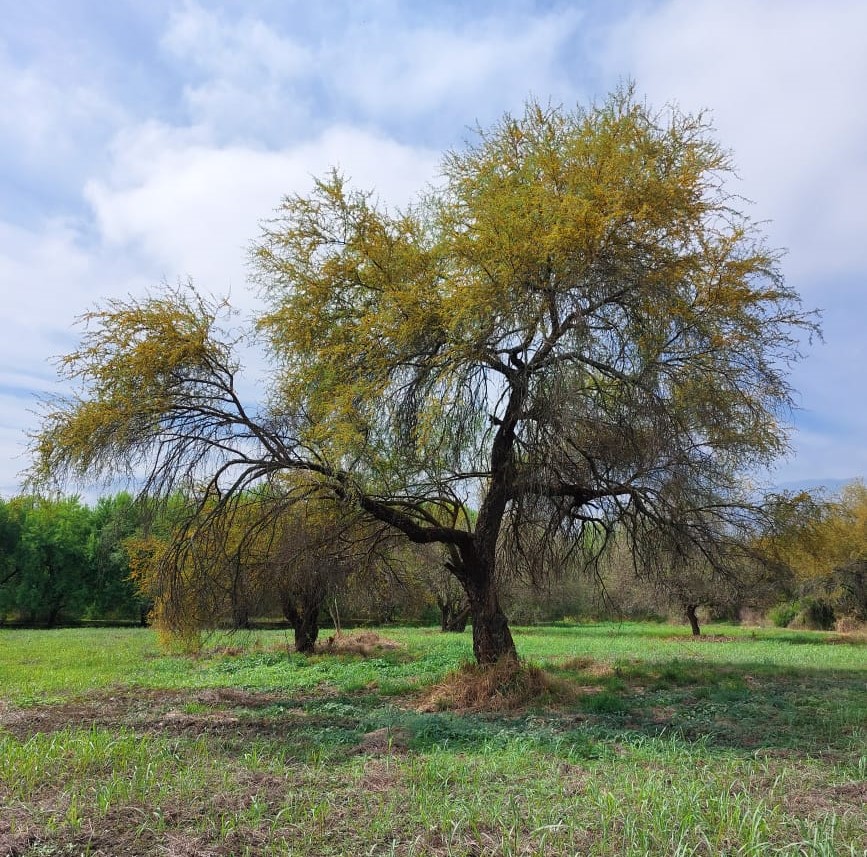
The huizache exhibits a morphology that combines the visual fragility of its foliage with a highly aggressive defensive structure. It is a tree that can grow as a dense shrub or reach heights of up to 26 feet, developing a rounded or umbrella-shaped crown.
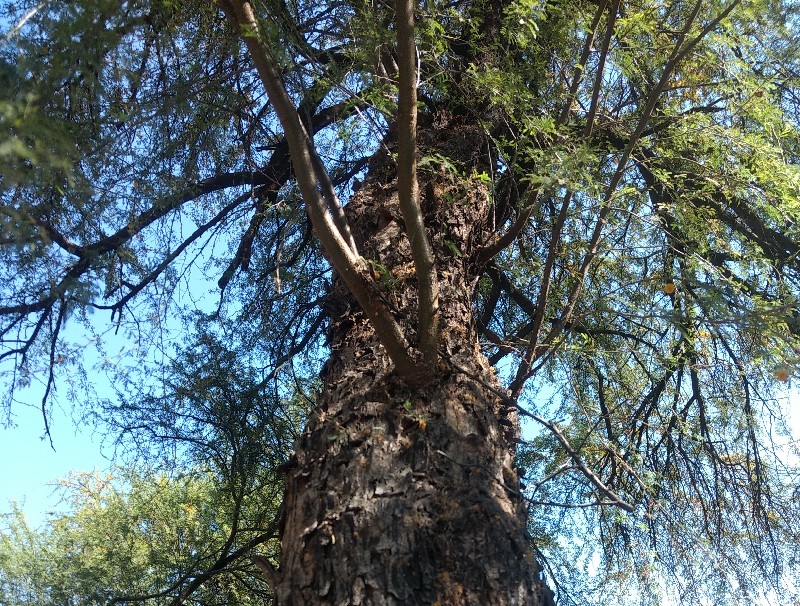
The Trunk and Branches: Zigzag Architecture
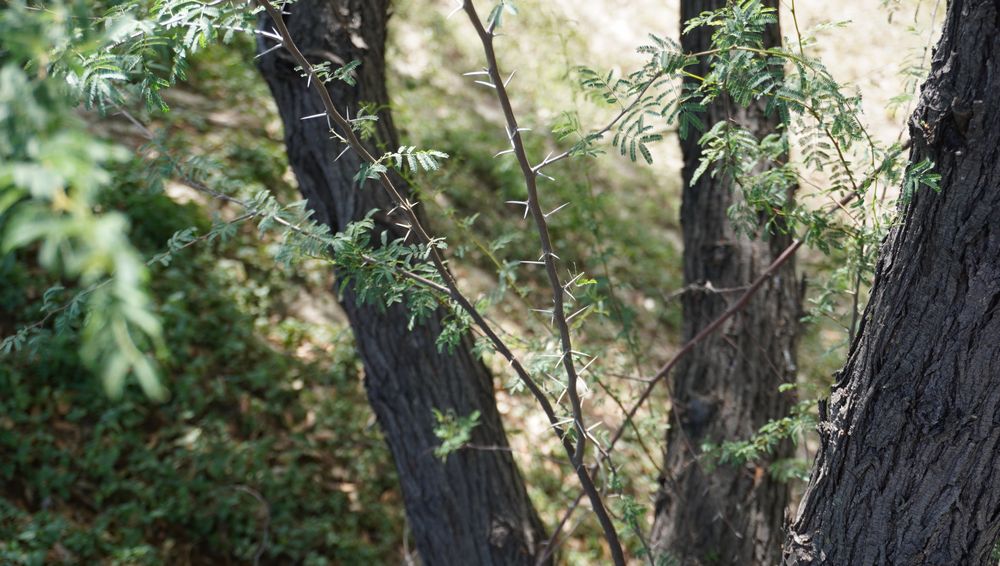
One of the most peculiar characteristics of its branches is their growth in a “zig-zag” pattern.
- Bark: In young specimens, the bark is smooth and has a reddish-brown hue. With maturity, it becomes grayish, rough, and develops longitudinal fissures.
- The Thorns: They are perhaps its most distinctive feature. They appear in pairs at the base of the leaves (spiny stipules). They are whitish or light gray in color, very rigid and extremely sharp, measuring between 1 and 3 centimeters in length. These serve a dual function: defense against herbivores and condensation of atmospheric moisture.
Leaves: Bipinnate and Delicate
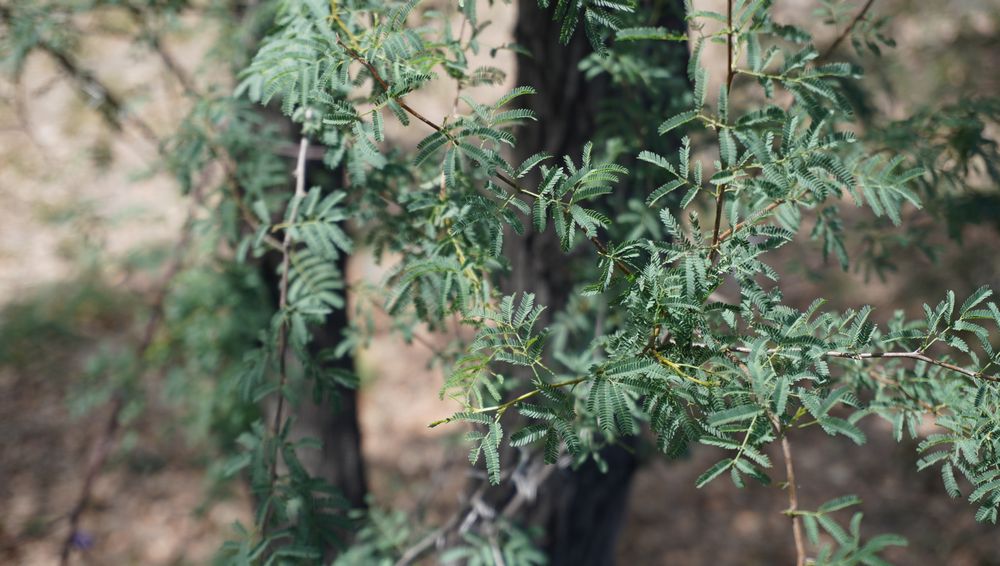
Like the mesquite, the huizache (sweet acacia) has compound leaves that allow it to maximize light capture while minimizing water loss through transpiration.
- Structure: They are bipinnate leaves, which means they are divided into several pairs of pinnae, each of which contains numerous small, linear leaflets.
- Nyctinastic Movement: The huisache has the ability to close its leaves during the night or under extreme water stress conditions, an intelligent mechanism to conserve internal moisture.
- Color: They exhibit a pale green or grayish hue, which helps reflect some of the intense solar radiation in the areas where they grow.
The Fruit: The Cylindrical Legume
The fruit of the huizache is technically a legume, but with a shape very different from the flat pod of the mesquite.
- Morphology: It is a cylindrical, thick, and slightly curved pod, about 4 to 7 centimeters long. When mature, it takes on a dark brown or nearly shiny black color.
- Content: Unlike other acacias, this pod is indehiscent (it does not open on its own when mature). Inside, the seeds are immersed in a light-colored, spongy, and fibrous pulp.
- Properties: These pods are rich in tannins, which historically made them valuable for the production of black inks and leather tanning.
Root System: Deep Exploration
To survive in environments where surface water is nonexistent, the huizache develops a powerful taproot that sinks vertically in search of aquifers. Additionally, it has a network of lateral roots that allow it to take advantage of light rains. As a legume, its roots harbor nodules with bacteria of the genus Rhizobium, which capture nitrogen from the atmosphere and transfer it to the soil, enriching soils that would otherwise be barren.
The Huisache in Industry and Traditional Medicine
The huisache (Vachellia farnesiana) is a species of remarkable utility. Over the centuries, various cultures have made use of everything from its flowers to its roots, making it an invaluable economic and cultural resource.
The Cassie Flower: Liquid Gold in Perfumery
As mentioned earlier, the flower of the huisache is the main component of “cassie absolute.”
- Extraction in France: In the Grasse region of France, it is specifically cultivated for high-end perfumery. Its essence provides intense floral notes, sweet and slightly woody, which are impossible to replicate synthetically with the same richness.
- Market value: Because thousands of handpicked flowers are needed to produce a small amount of essence, huizache – sweet acacia extract is one of the most expensive ingredients in the fragrance industry.
Medicinal Properties and Craft Uses
Beyond its aroma, the tree possesses remarkable chemical properties:
- Rich in Tannins: The bark and pods are rich in tannins, traditionally used for tanning hides and producing high-quality black inks.
- Traditional Medicine: In various regions, infusions of its flowers and leaves have been used to relieve digestive issues and throat ailments, thanks to their astringent and anti-inflammatory properties.
- Forage: Despite the thorns, the pods are a source of protein-rich food for livestock in areas where grass is scarce during drought.
Management and Conservation of the Huisache
Although the huisache is an extremely beneficial species, its colonization capacity is so high that in some regions it can be considered invasive if not managed properly.
The Huisache as a Restorative Species
In soil restoration projects, the huisache is one of the best options. Being a legume, it forms a symbiosis with soil bacteria to fix atmospheric nitrogen. This means it naturally “fertilizes” the soil, allowing other, more demanding species to grow later in soils that were previously barren.
Care Tips
If you wish to incorporate a huisache into a managed landscape:
- Training Pruning: It is vital to perform annual pruning to give the tree a proper structure and prevent it from growing as an impenetrable shrub.
- Safety: Due to its rigid thorns, it should be planted away from frequently trafficked areas or children’s play zones.
- Climate: It does not require watering once established, making it ideal for low-maintenance or xeriscape gardens.
Conclusion: A Symbol of Resilience and Elegance
The huisache is living proof that beauty and usefulness can flourish under the harshest conditions. From the fields of the Mexican semi-desert to perfume laboratories in France, this tree continues to amaze with its versatility.
Understanding the huisache is valuing the biodiversity of arid zones. It is not just a thorny shrub; it is a life fixer in the soil, a refuge for wildlife, and one of nature’s finest fragrances. By protecting and better understanding Vachellia farnesiana, we ensure the persistence of a resilient ecosystem full of aromatic surprises.