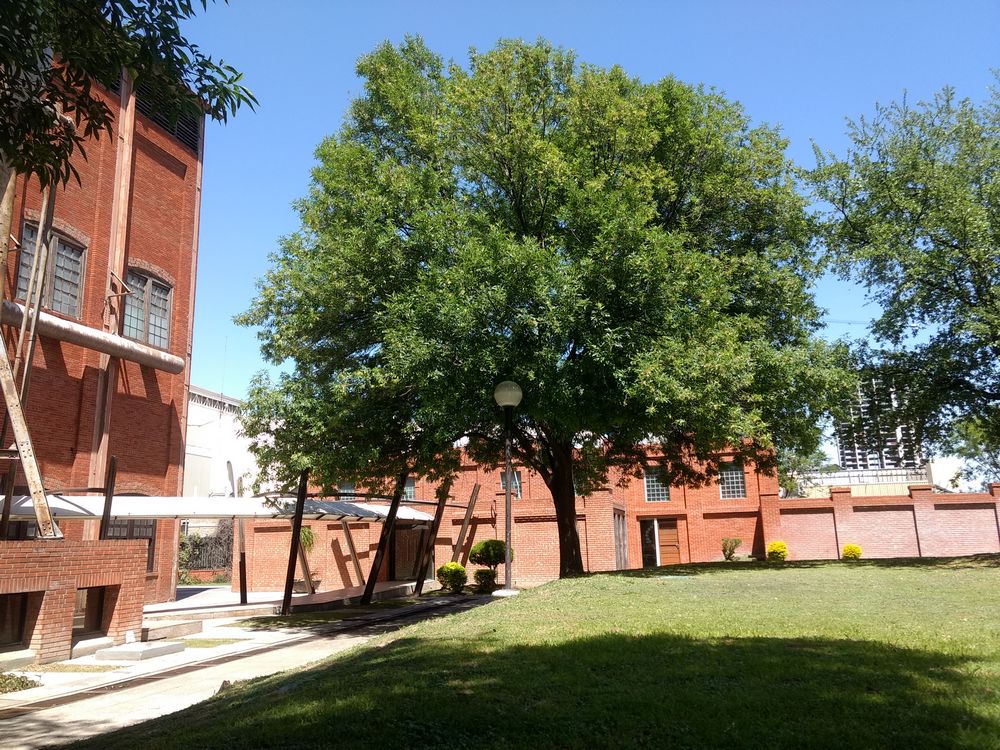
What is the Pata de Vaca Tree?
The Orchid Tree, scientifically known as Bauhinia variegata, is a fascinating species belonging to the Fabaceae family. Native to Southeast Asia and the Indian Subcontinent, this tree has captured the attention of botanists and gardeners alike due to its unique beauty and adaptability to various climates.
The name “Cow’s Hoof” or Pata de Vaca comes from the unique shape of its leaves, which resemble the footprints of a bovine. This characteristic not only gives it a distinctive appearance but has also been a subject of study and admiration in various fields of botany.

Origin and Scientific Classification of Bauhinia variegata
Classified within the genus Bauhinia, the Cow’s Foot Tree is part of a broader group known as Orchid Trees due to their showy flowers that resemble exotic orchids. Bauhinia variegata in particular stands out for its vibrantly colored flowers ranging from white to pink and purple, providing a visual spectacle during the blooming season.
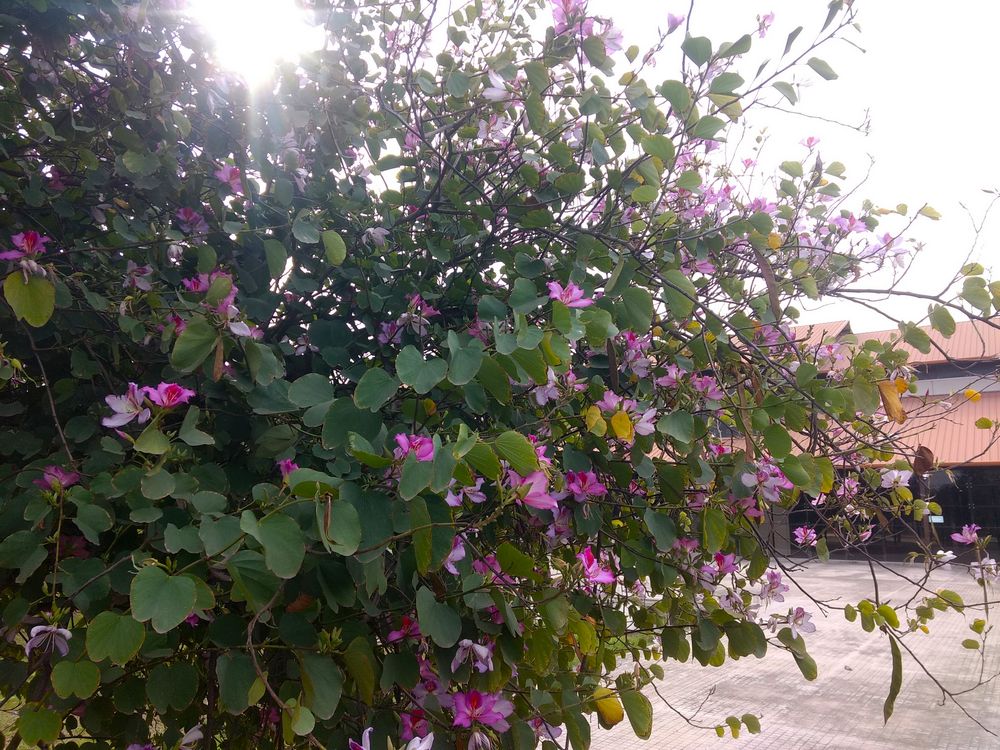
In terms of its use, the Orchid Tree is cultivated not only for its ornamental beauty but also for its applications in traditional medicine across various cultures, where it is used to treat a variety of ailments. Additionally, its ability to adapt to different soil types and climatic conditions makes it a popular choice in reforestation programs and urban gardening.
Distinctive Characteristics of the Pata de Vaca Tree
General Description of Bauhinia variegata
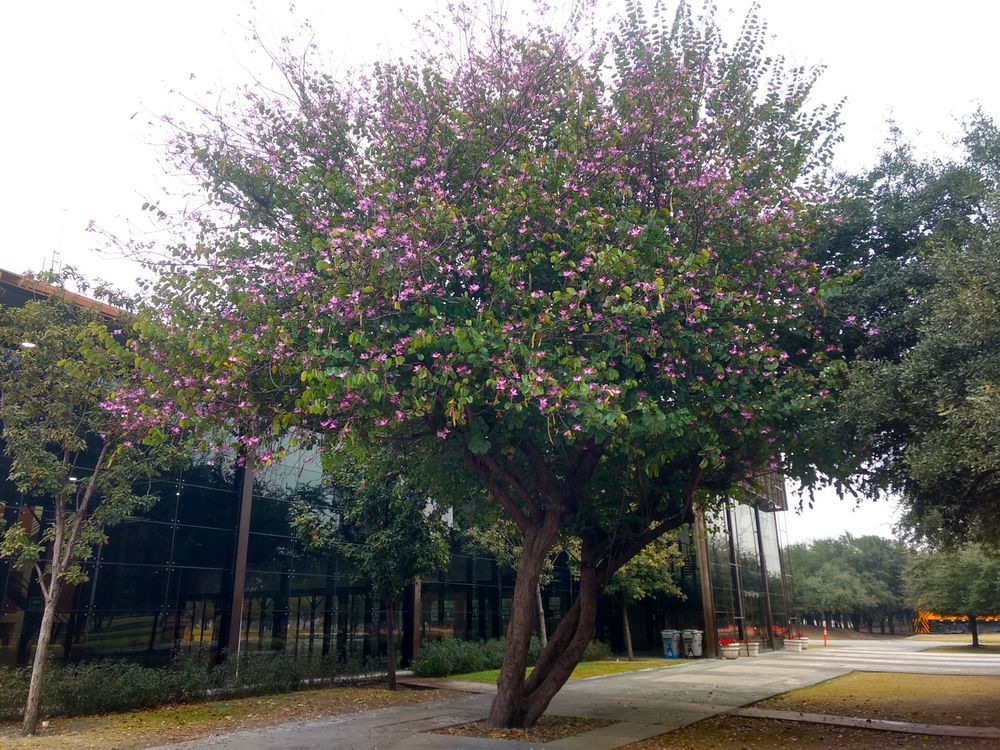
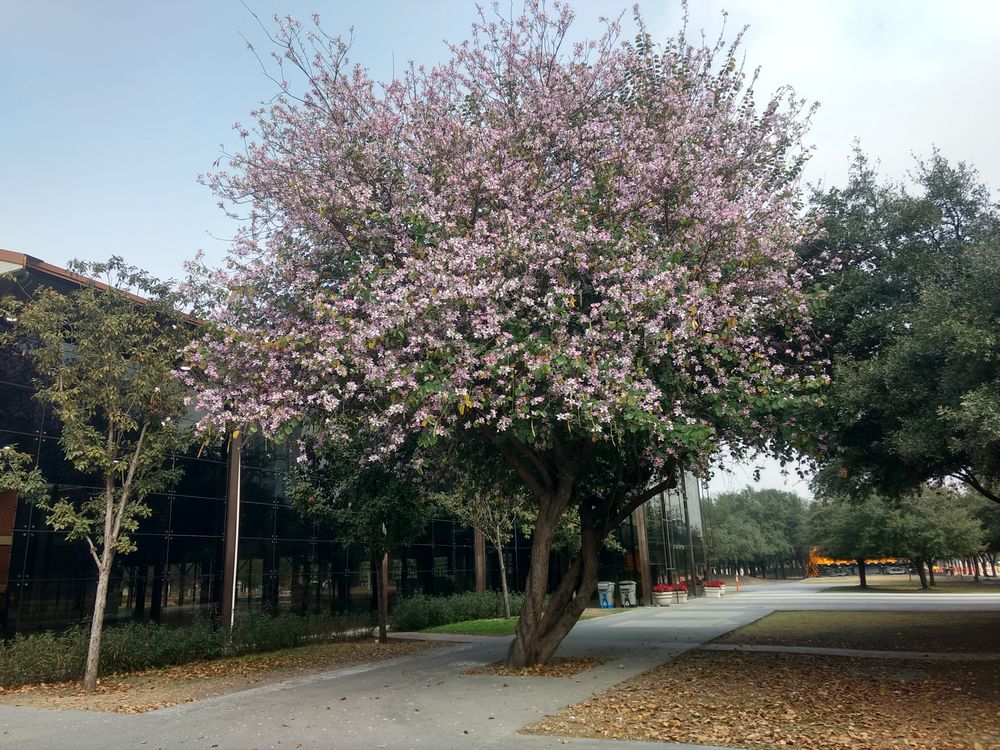
The Pata de Vaca is distinguished by its elegant stature and unique botanical characteristics. Reaching heights of up to 40 feet, this tree is valued both for its generous shade and its aesthetic impact in landscapes and gardens. Its branches spread widely, creating a rounded and spacious canopy that is ideal for providing coverage and coolness.
In addition to its impressive size, the Bauhinia variegata is easily recognized by its spectacular flowers that appear in late winter and early spring. These flowers, which can be single or double depending on the variety, emit a gentle fragrance and are highly attractive to bees and other pollinators, playing a vital role in the local ecosystem.
Unique Leaves Shaped Like Cow’s Hoof
One of the most emblematic features of this tree is its leaves. The leaves of the Pata de Vaca tree are bi-lobed and resemble a cow’s footprint, from which its common name is derived. These leaves are generally bright green and can reach up to 6 inches wide. Their shape is not only an aesthetic curiosity but also allows for easy identification within its genus. During autumn, the leaves acquire yellow and orange hues, offering a visual spectacle before falling to the ground.

The Trunk: Structure and Texture
The trunk of the Orchid Tree is another remarkable aspect. Robust and with a rough-textured bark, the trunk can reach a diameter of up to 12 inches. The bark is generally pale gray to brown, with vertical fissures that give it a rustic and attractive appearance. This sturdy structure not only supports the tree’s canopy but is also resistant to various weather conditions, making the tree highly valued in urban gardening and areas prone to strong winds or heavy rains.

Flowers of the Orchid Tree
Shape and Color of Flowers
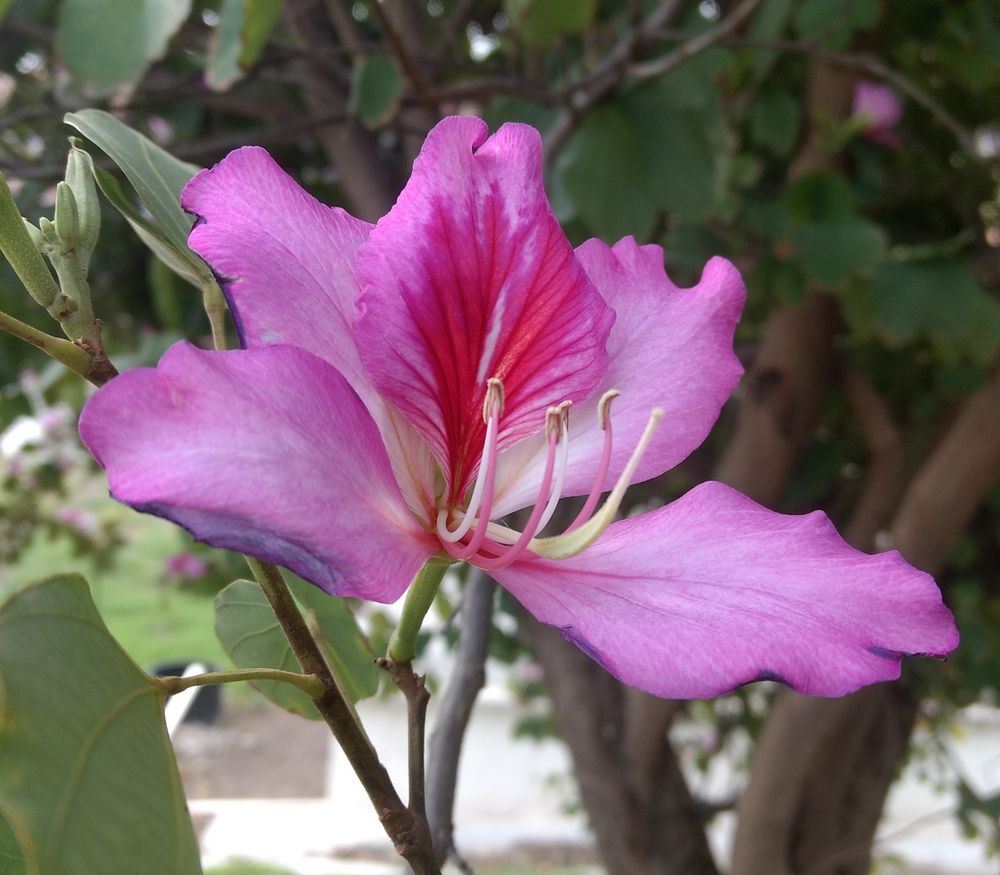
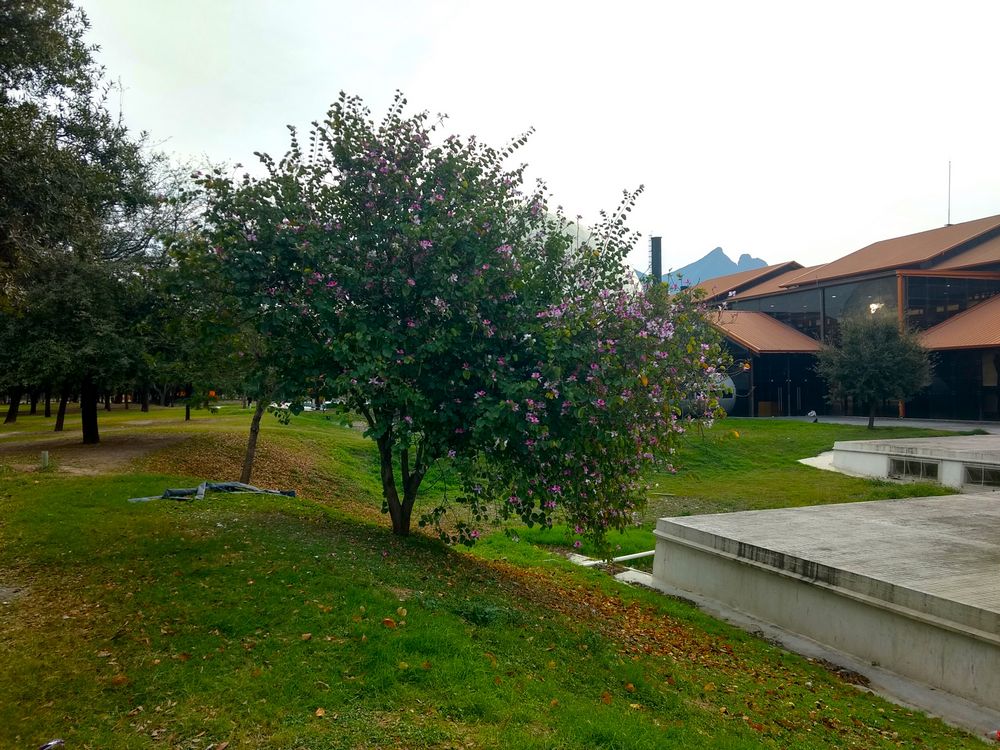
The flowers of the Pata de Vaca are undoubtedly one of its most striking features. These flowers resemble those of an orchid, which explains one of its common names, Orchid Tree. Each flower has five delicately arranged petals, with the upper petal often marked with a more colorful pattern or distinctive veins. The flower colors range from pure whites to vibrant pinks and purples, giving them an unmatched visual appeal and making them stand out in any landscape.

Blooming Season and Visual Appeal
The flowering of Bauhinia variegata occurs mainly during the winter and spring months. This flowering period not only beautifies the surroundings but also attracts a variety of pollinators. The display of flowers, combined with the greenness of its leaves, transforms this tree into a natural spectacle, especially valued in urban gardens and parks for its ability to catch the eye and enhance the landscape.

Fruits and Seeds
Type of Fruit and Characteristics
The fruits of the Cow’s Hoof Tree are equally distinctive. They appear in the form of pods, typical of members of the Fabaceae family, measuring between 10 and 20 centimeters in length. These pods are initially green and turn brown when mature. Their texture is woody and segmented, containing several seeds that are essential for the propagation of the species.
Maturation and Dispersal Period
Fruit ripening usually occurs toward the end of summer or the beginning of fall. Once mature, the pods open to release the seeds, which are dispersed by the wind or by animals that feed on these fruits. This natural dispersal mechanism helps ensure the continuation and expansion of the species in its habitat, contributing to its proliferation in various geographic regions.

Roots of the Pata de Vaca Tree
The root system of the Pata de Vaca is as impressive as the rest of the plant. Its roots are strong and deep, allowing it to stabilize in a variety of soils, even less fertile ones. This ability to develop deep roots not only helps the tree access groundwater during drought periods but also contributes to soil stability, reducing erosion and improving substrate quality over time.
Benefits and Properties of the Pata de Vaca Tree
Contributions to Local Biodiversity
The Pata de Vaca tree plays a vital role in local biodiversity. On one hand, its flowers attract a wide variety of pollinators, including bees, butterflies, and birds, which are crucial for the pollination of many other plants. Additionally, the tree’s leaves and fruits serve as a food source for local wildlife, contributing to a sustainable and diverse food chain in the environment where it is found.
Adaptability and Resilience
One of the most remarkable qualities of the Bauhinia variegata is its incredible adaptability and resilience. Capable of withstanding both drought periods and excessive rainfall, this tree is ideal for reforestation and for beautifying urban areas where other species might not thrive as easily. Its ability to adapt to different climatic and soil conditions makes it invaluable in sustainable gardening efforts and environmental rehabilitation projects.
Medicinal Uses of Bauhinia variegata
The Pata de Vaca is valued not only for its beauty and resilience but also for its applications in traditional medicine. In various traditional medicine systems, parts of this tree are used to treat diverse ailments. The leaves and bark have been used to help regulate blood sugar levels, which is particularly beneficial for people with diabetes. Additionally, it is attributed with anti-inflammatory and antimicrobial properties, making its extracts a popular choice for healing wounds and treating skin infections.
Tips for Growing the Orchid Tree
- The Pata de Vaca Tree prefers warm and tropical climates but can tolerate moderate temperatures and light frosts. It is important to protect it from severe frost, especially during its first years of growth.
- As for the soil, this tree is remarkably adaptable. It prefers well-drained soils rich in organic matter but can grow in clay or sandy soils if drainage is properly managed.
- Watering should be moderate. Although the tree is drought-tolerant once established, it is crucial to ensure regular watering during the first few years to promote robust growth.
- Full sun exposure is ideal for the Orchid Tree, although it can tolerate some shade. However, excessive shade can significantly reduce flowering.
Conclusion: The Importance of Preserving the Pata de Vaca Tree
The Pata de Vaca tree, or Bauhinia variegata, is not only a decorative element in the landscape but also a vital component for biodiversity and the ecological balance of the habitats where it thrives. Its ability to adapt to different environments and its appeal to a variety of pollinators make it invaluable in the conservation of healthy ecosystems.
In addition to its environmental benefits, the medicinal properties of this tree offer potential for treatments of various conditions, highlighting the need for its study and conservation. Cultivating an ecological awareness about the importance of species like the Pata de Vaca is crucial for the sustainability of our natural resources and the health of our planet.