What is the Loquat Tree?
The loquat tree, scientifically known as Eriobotrya japonica, is a fruit-bearing species from the Rosaceae family. This tree is highly valued both for its ability to produce delicious and juicy fruits, the loquats, and for its attractive presence in gardens and orchards. With a height that can reach between 5 and 10 meters, the loquat tree is notable for its robustness and dense evergreen foliage, which provides generous shade throughout the year.

Origin and Geographic Distribution
The loquat originally comes from the temperate regions of China. From there, its cultivation spread to Japan and Korea, where it adapted wonderfully to the local climate. In the 19th century, the cultivation of the loquat tree expanded to other parts of the world, finding a new home in the Mediterranean, America, and other subtropical regions. Today, this tree is widely cultivated in these areas, thanks to its ability to adapt to different climatic conditions and its relative ease of maintenance.
Botanical Characteristics of the Loquat
Description of the Trunk and Bark
The trunk of the loquat tree is sturdy and can reach a considerable diameter as the tree matures. The bark, a grayish-brown color, is smooth in young specimens but tends to crack and become rougher with age. These features not only give it an imposing appearance but also help protect the tree from climatic variations and potential pests.
The Leaves of the Loquat: Shape and Function
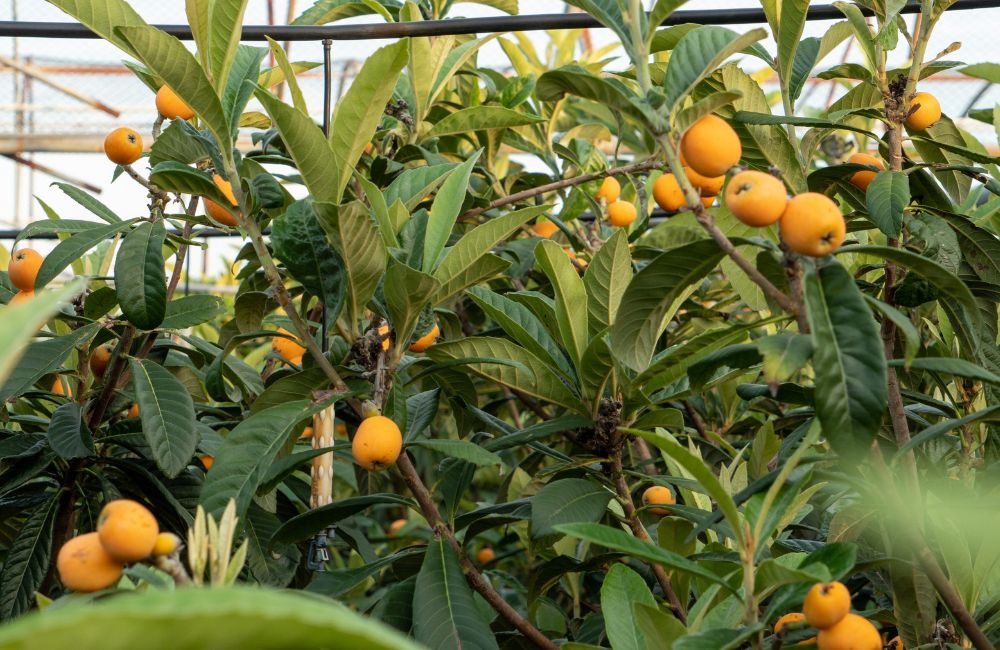
The leaves of the loquat are large, ranging from oblong to lance-shaped, and have a glossy dark green color. They can measure up to 10 inches long and are notably thick and leathery to the touch. These evergreen leaves not only beautify the tree throughout the year but also perform an essential photosynthetic function, helping the tree thrive in a variety of climate conditions.
The Loquat Flowers: Hidden Beauty
The loquat tree produces flowers in clusters that emerge at the ends of the branches. These flowers are small and pure white, with a soft yet pleasant aroma that attracts bees and other pollinators. The flowering generally occurs in autumn or early winter, contrasting with most fruit trees that bloom in spring.
Roots of the Loquat Tree: The Invisible Support
The roots of the loquat tree are strong and spread widely, providing excellent stability and the ability to efficiently absorb nutrients from the soil. Although they are not invasive, it is important to consider their vigorous growth when planting the tree, ensuring it has enough space to develop without competing with nearby plants.
Loquat Fruits: Between Sweetness and Nutrition
Appearance and Flavor of the Fruits
The fruits of the loquat tree are a true delight that combines sweet flavors with a slight acidic touch. Rounded and slightly elongated in shape, loquats have a smooth skin that varies in color from bright yellow to deep orange as they ripen. When opening a loquat, one discovers juicy and aromatic pulp with two to five large seeds at its center. The unique and refreshing flavor of loquats makes them favorites for eating fresh or in various culinary preparations.

Nutritional Value of the Loquat
In addition to its delicious flavor, the loquat is also highly nutritious. These fruits are an excellent source of vitamins, especially vitamin A, vitamin C, and some of the B-complex vitamins. They are also rich in minerals such as potassium, magnesium, and iron. With a high fiber content and low calorie levels, loquats are an ideal choice to include in balanced diets, helping to improve digestion and providing antioxidant benefits that protect against cellular aging and various diseases.
Properties and Benefits of the Loquat Tree
Medicinal and Therapeutic Uses
The loquat tree is appreciated not only for its fruits but also for its multiple medicinal and therapeutic uses. Traditionally, loquat leaves have been used to prepare infusions that help treat respiratory problems such as asthma and bronchitis. Additionally, these infusions are believed to be useful for improving digestive issues and regulating blood sugar. The bark, meanwhile, has been used in decoctions to combat inflammation and pain, showcasing the versatile healing properties of this tree.

The Loquat in Food: Culinary Uses
In the kitchen, the loquat offers a wide range of culinary possibilities. The fruits can be eaten fresh or used in a variety of dishes. They are excellent in jams, jellies, and preserves thanks to their perfect balance between sweetness and acidity. They can also be incorporated into fruit salads, pies, and desserts. Additionally, in some cultures, loquats are a popular ingredient in sauces and meat accompaniments, providing an exotic and delicious touch to traditional meals.
Care and Cultivation of the Loquat Tree
Climate and Soil Requirements
The loquat tree is quite adaptable, but for optimal growth, it prefers temperate to subtropical climates. It does not tolerate severe frosts well, although it can endure low temperatures for short periods. Regarding soil, the loquat thrives best in well-drained, slightly acidic to neutral soils. The presence of clay soil can be beneficial as long as it does not cause waterlogging, which could negatively affect the roots.
Planting and Maintenance Guide
- Site selection: Make sure to choose a location with good sun exposure and protection from strong winds.
- Soil preparation: Improve the soil with well-decomposed compost or manure before planting to enrich the soil and enhance drainage.
- Planting: Dig a hole twice the size of the root ball. Gently place the tree and fill in with the original soil, making sure no air pockets remain.
- Watering: Water regularly during the first years after planting, especially in warmer, drier months. Once established, the loquat tree is relatively drought-tolerant.
- Fertilization: Apply a balanced fertilizer at the beginning of spring to promote healthy growth and good fruiting.
- Pruning: Perform formative pruning during the first years to establish a strong structure. Subsequently, pruning should be limited to removing dead or diseased branches and thinning the center of the tree to allow better air circulation and light penetration.
- Pest and Disease Protection: Keep an eye out for possible insect infestations and diseases. Treat problems as soon as they are detected to prevent further damage.
Ecological Impact of the Loquat Tree
The Loquat and Biodiversity
The loquat tree plays a significant role in promoting biodiversity. As an evergreen tree, it provides continuous cover and habitat throughout the year for various species of birds and insects. Its flowers attract pollinators such as bees and butterflies, essentially contributing to the health of local ecosystems. Additionally, the loquat fruit serves as a food source for wildlife, especially during the colder months when other food may be scarce.

Contribution to Environmental Sustainability
The loquat contributes to environmental sustainability in several ways. As a relatively fast-growing and long-lived tree, it helps capture carbon, which is vital for climate change mitigation. Its sturdy roots are effective in preventing soil erosion, especially in areas prone to landslides. Additionally, requiring less water than other fruit crops and tolerating drought well, the loquat presents a viable option for sustainable agriculture in areas with limited water resources.
Conclusion: The Role of the Loquat Tree in Ecological Awareness
The loquat tree is more than just a source of delicious fruits. Its ability to promote biodiversity, contribute to environmental sustainability, and enrich landscapes positions it as a vital component in fostering ecological awareness. Cultivating loquat trees can not only improve the quality of our environment but also teach us the value of integrating sustainable practices into our daily activities. For all these reasons, the loquat deserves to be valued and protected as a precious and beneficial natural resource.

Frequently Asked Questions About the Loquat Tree
How can I tell when loquats are ripe for harvest?
Loquats are ready to harvest when their color changes from green to a deep yellow or orange hue. The fruit should also be slightly soft to the touch. It is important to harvest them at this stage, as they do not continue to ripen once picked.
Does the loquat tree need a lot of sunlight to grow?
Yes, the loquat tree thrives in places with abundant direct sunlight. Although it can tolerate partial shade, full sunlight is ideal for optimal growth and good fruit production.
What type of maintenance does a loquat tree require?
Basic maintenance includes regular watering, especially during drought periods, and annual pruning to maintain the tree’s shape and promote overall good health. It is also advisable to apply a balanced fertilizer at the beginning of spring.
Is the loquat tree resistant to pests?
While the loquat tree is relatively hardy, it can be susceptible to certain pests and diseases, such as scale insects and powdery mildew. It is important to regularly inspect the tree and treat any infestation or disease as early as possible to prevent more serious damage.