

Introduction to the Live Oak
The live oak, scientifically known as Quercus virginiana, is a species of evergreen tree notable for its resilience and ability to retain its green foliage year-round. This characteristic makes it a popular choice in both landscaping and reforestation efforts where constant vegetative cover is required. With its sturdy structure and thick, glossy leaves, the live oak tree is admired for its beauty and unyielding strength.

Ecological Importance of the Live Oak
The evergreen oak is not only remarkable for its appearance but also for its significant ecological role. This tree serves as both habitat and food source for a wide range of animal species, from birds to mammals. The acorns it produces are essential to the diet of numerous wildlife species, while its dense canopy provides shelter and protection year-round. Additionally, the live oak plays a crucial role in soil stabilization and water cycle regulation, helping to maintain the balance of local ecosystems. Thanks to its capacity to capture carbon, this tree also contributes to climate change mitigation, enhancing its value in conservation and environmental management programs.
Botanical Characteristics of the Live Oak
Leaf: Morphology and Adaptations
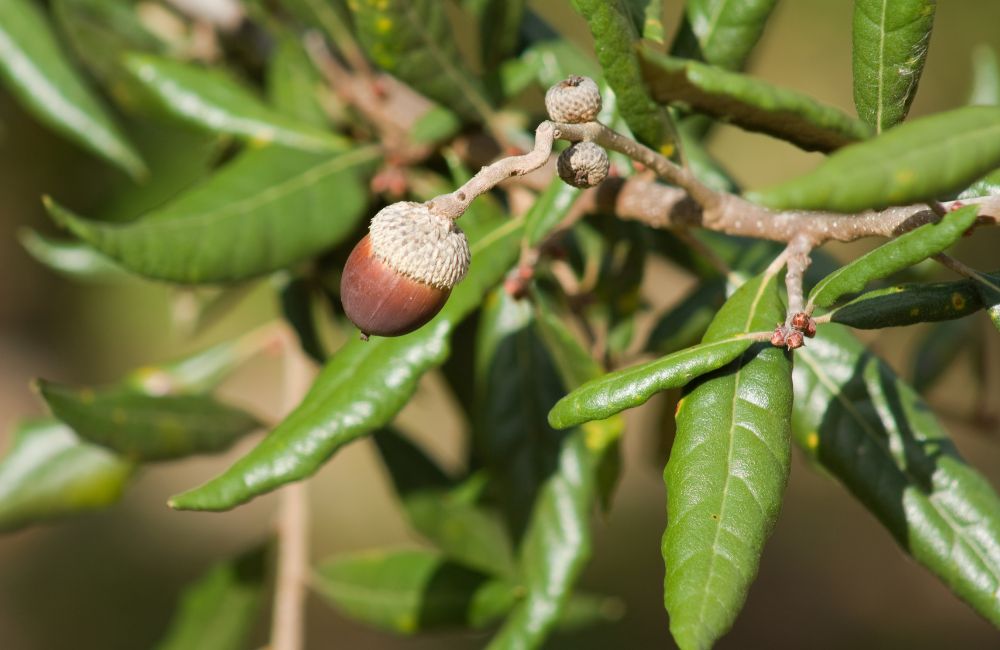
The leaves of the live oak are a true display of adaptation and efficiency. They are thick, leathery, and have an oval to elliptical shape, characteristics that help reduce water loss and protect the plant under drought conditions. The dark green color of the leaves, with a glossy shine on the upper surface and a more matte texture underneath, not only makes them beautiful to look at but also is an adaptation to maximize light absorption, essential for photosynthesis. These evergreen leaves, which remain on the tree year-round, are a key example of how the live oak has adapted to thrive in its habitat.

Trunk: Structure and Functions
The trunk of the evergreen oak tree is sturdy and can reach impressive diameters, providing structural support to the tree and allowing it to reach considerable heights. Its bark, with a dark gray color and rough texture, not only protects the tree from harsh weather and predators but also plays a vital role in nutrient storage and in conducting water and minerals from the roots to the leaves. This structural strength is fundamental to its longevity and resistance to the elements.

Roots: Types and Ecological Benefits
The roots of the live oak are deep and extensive, allowing it to access groundwater during droughts and stabilize the soil in its environment. These roots not only physically support the tree but also create a network that benefits the ecosystem by preventing soil erosion and improving soil quality through the decomposition of organic matter. The root system of the live oak tree is, therefore, essential to the ecological health of its habitat, supporting both other plants and the area’s wildlife.
Reproduction of the Live Oak
The reproduction of the evergreen oak is mainly carried out through its acorns, which are the fruit of the tree. These acorns are seeds that, once fallen to the ground, can germinate and grow into new trees if conditions are favorable. This reproduction process ensures the dispersal of the species and the colonization of new areas, contributing to the diversity and resilience of the ecosystem. The acorns also attract wildlife, which often depends on them as a food source, playing a crucial role in the food chain and in seed dispersal.
Flowers: Characteristics and Blooming Periods
The flowers of the evergreen oak are small and inconspicuous, usually yellow-green in color. They appear in clusters and are wind-pollinated, a strategy that promotes efficient pollen dispersal. Flowering generally occurs in the spring, allowing the fertilization process to be completed in time for the development and maturation of acorns in the fall. This timing ensures that the seeds are ready to be dispersed at the beginning of the most favorable seasons for their germination.
Fruits: Types and Dispersal
The fruit of the live oak is the acorn, known for its hard shell and its single large seed. These acorns vary in size and shape depending on the specific subspecies of the oak, but all play a crucial role in the dispersal of the species. Animals, especially rodents and birds like jays, are the main agents of dispersal. By feeding on these acorns and transporting them to new locations, these animals facilitate the spread of the live oak tree across diverse habitats.
Properties and Uses of the Live Oak
Medicinal and Healing Properties
Traditionally, the live oak has been valued for its medicinal properties. The bark, rich in tannins, has been used to treat skin conditions and digestive issues. These tannins also have astringent and anti-inflammatory properties, making the bark useful in homemade remedies for cuts and wounds. More recent research suggests that extracts from the tree could have antioxidant and anti-inflammatory benefits, expanding its potential use in natural therapies.
Uses in Landscaping and Gardening
In landscaping, the live oak tree is valued for its robustness and aesthetic appeal. Its dense, evergreen foliage provides consistent green coverage, making it ideal for creating shaded and private areas. Moreover, its drought resistance makes it an excellent choice for sustainable gardens and xeriscaping. Its ability to adapt to different soil types and climatic conditions makes it versatile and easy to integrate into various landscape designs.

Conservation and Care of the Live Oak
Conservation and Reforestation Practices
The conservation of the evergreen oak is crucial to maintaining biodiversity and the stability of the ecosystems where it lives. Conservation practices include protecting natural areas where these trees are predominant and implementing reforestation programs to restore degraded areas.
These programs not only aim to plant new individuals but also ensure the genetic diversity of the live oak tree, which is vital for the species’ resilience against diseases and climate change. Additionally, environmental education plays a fundamental role in raising awareness about the importance of these trees in our ecosystems.

Basic Care and Pest Management
Basic care for the live oak always includes ensuring that the tree is planted in well-drained soil and that it receives enough water during its first years of growth, until it is fully established. Although it is drought-tolerant, during extended dry periods, supplemental watering is recommended.
Additionally, it is important to perform occasional pruning to maintain the health and structure of the tree. Regarding pest management, the live oak tree can be susceptible to insects such as the acorn weevil and fungal diseases. It is crucial to monitor these problems and treat them early with ecological methods whenever possible, to avoid excessive use of chemicals that may harm the local ecosystem.
Exploring Oak Varieties: A Look at the Most Popular Species
Oak Varieties: An Amazing Diversity
- Quercus robur (English Oak): Common in Europe, it is known for its robustness and longevity, living up to a thousand years under optimal conditions.
- Quercus suber (Cork Oak): Famous for its bark, from which cork is harvested. It is essential in industries such as winemaking due to its unique properties.
- Quercus ilex (Holm Oak): Predominant in the Mediterranean, it is characterized by its drought resistance and its ability to adapt to poor, rocky soils.
- Quercus rubra (Northern Red Oak): Native to North America, it is valued for its fast growth and spectacular fall color.
- Quercus palustris (Pin Oak): Often found in wet areas, it is recognized for its pyramidal shape and deeply lobed leaves.
What Makes Each Variety Unique?: Differences and Distinctive Characteristics
Each oak variety has unique characteristics that make it special. For example, Quercus robur is notable for its incredible resilience and ability to survive in varied climates. On the other hand, Quercus suber has a bark that is vital for the cork industry, offering a renewable and sustainable resource. Quercus ilex, with its evergreen foliage, provides color and cover year-round, ideal for landscaping in arid regions.
Meanwhile, the Northern Red Oak attracts nature watchers and gardeners with its vibrant autumn hues. Finally, the Pin Oak adapts to wet areas where other species could not thrive, playing a crucial role in habitat conservation and aquatic biodiversity.

Why Are Oaks Called “Robles”: Exploring the Botanical and Cultural Reasons
The term “oak” for oaks comes from botanical similarity and common confusion in terms across different languages. In English, “oak” refers to trees of the genus Quercus, which in Spanish translates as “encino” or “oak” depending on the region. This duality in nomenclature reflects both linguistic differences and the broad distribution and cultural significance of these trees in diverse societies. Historically, both oaks and encinos have been symbols of strength and longevity, playing essential roles in mythologies and traditions across Europe and the Americas.
Benefits of the Live Oak for the Ecosystem
Contributions to Biodiversity
The evergreen oak is fundamental to the biodiversity of the ecosystems in which it is found. By providing food and shelter, this tree is a vital axis in its habitat. The acorns it produces feed a variety of animals, from birds to large mammals. Additionally, its dense canopy serves as a home or temporary refuge for numerous species of birds, insects, and other small animals, creating a micro-ecosystem within its larger environment.

The Live Oak and the Water Cycle
The evergreen oak tree plays an important role in the water cycle within its ecosystem. Its deep roots help stabilize the soil and allow greater water infiltration, which reduces surface runoff and increases the amount of water that seeps into underground aquifers. This ability to retain and distribute water not only helps maintain aquifer levels but also provides drought resilience for the broader biological community. Thus, the oak contributes to a sustainable and healthy water balance in its environment.
Conclusion: The Future of the Live Oak
As we move toward a future with increasing environmental challenges, the importance of species like the live oak becomes ever more relevant. Fostering ecological awareness and understanding the need to conserve and protect these trees is crucial to ensuring their survival and that of the ecosystems that depend on them.

Continuous efforts in environmental education, reforestation, and sustainable management are essential to maintain and expand oak populations. With global commitment and consistent local actions, the future of the live oak can be bright, playing a key role in the fight against climate change and biodiversity loss.
Frequently Asked Questions
How long can a Live Oak live?
The evergreen oak is known for its longevity, capable of living for several centuries under suitable conditions. Some specimens can exceed 300 years of age, highlighting the importance of their conservation and care.
Is the Live Oak suitable for any type of soil?
Although the live oak is relatively adaptable, it prefers well-drained soils and may struggle in heavily compacted or excessively wet soils. It is important to assess soil conditions before planting to ensure the best possible development of the tree.
What measures can be taken to protect the Live Oak from pests?
Protection against pests begins with keeping the tree healthy through proper care and regular monitoring. The use of pesticides should be carefully managed, and preferably ecological or natural solutions should be chosen to avoid harming the tree’s environment and the beneficial organisms living in it.


