What is the Cedar Tree?
The cedar tree, known for its imposing presence and distinctive aroma, belongs to the family Pinaceae. These trees are evergreen conifers, meaning they keep their green leaves throughout the year. With various species distributed around the world, cedars are revered both for their beauty and for their strong, aromatic wood, used in carpentry and construction.

Ecological Importance of the Cedar
The cedars play a crucial role in their native ecosystems. They act as important carbon sinks, helping to mitigate climate change. Additionally, their dense foliage provides shelter and food for numerous species of birds and mammals. The importance of the cedar tree also extends to soil protection, as their roots help prevent erosion.
Botanical Characteristics of Cedar
Leaves of the Cedar
The leaves of the cedar are soft needles that can vary in shade from a deep green to a bluish green. These needles are grouped in clusters, giving cedars their lush and dense appearance.

Trunk and Bark
The trunk of a cedar tree is robust and can reach impressive diameters. The bark, thick and fibrous, is characterized by its rough texture and its ability to withstand forest fires, making the cedar especially valuable in areas prone to these natural disasters.

Root System of the Cedar
The root system of the cedar is generally extensive and deep, providing a solid foundation that supports its large size. These roots not only stabilize the tree but also facilitate the absorption of essential nutrients from the soil, vital for its growth and survival in competitive forest environments.
Reproduction and Growth of the Cedar
Flowers of the Cedar
The flowers of the cedar tree are generally small and unobtrusive, with both male and female flowers present on the same tree but in different positions. The male flowers are yellow and produce pollen, while the female flowers are greener and mature into cones.
Fruits and Seeds
The fruits of the cedar are woody cones that can vary in size and shape depending on the species. These cones mature and release winged seeds, designed to be dispersed by the wind. The reproduction of cedars through their seeds ensures the perpetuation of the species and its expansion across vast areas.

Most Popular Cedar Tree Species
- Cedar of Lebanon (Cedrus libani): Known for its historic use in the construction of great temples and palaces in ancient civilizations, the Cedar of Lebanon is revered for its durable wood and majestic stature. This tree can grow up to 130 feet tall and is the national symbol of Lebanon.
- Atlas Cedar (Cedrus atlantica): Native to the Atlas Mountains in Morocco, this species is distinguished by its ability to adapt to various climates and soils. Its leaves are bluish-green, and it can reach up to 30 meters in height.
- Himalayan cedar (Cedrus deodara): This species is valued for its elegant shape and branches that tend to droop toward the ground. It is native to India and the Himalayas and is widely used in gardening for its attractive appearance and fast growth.
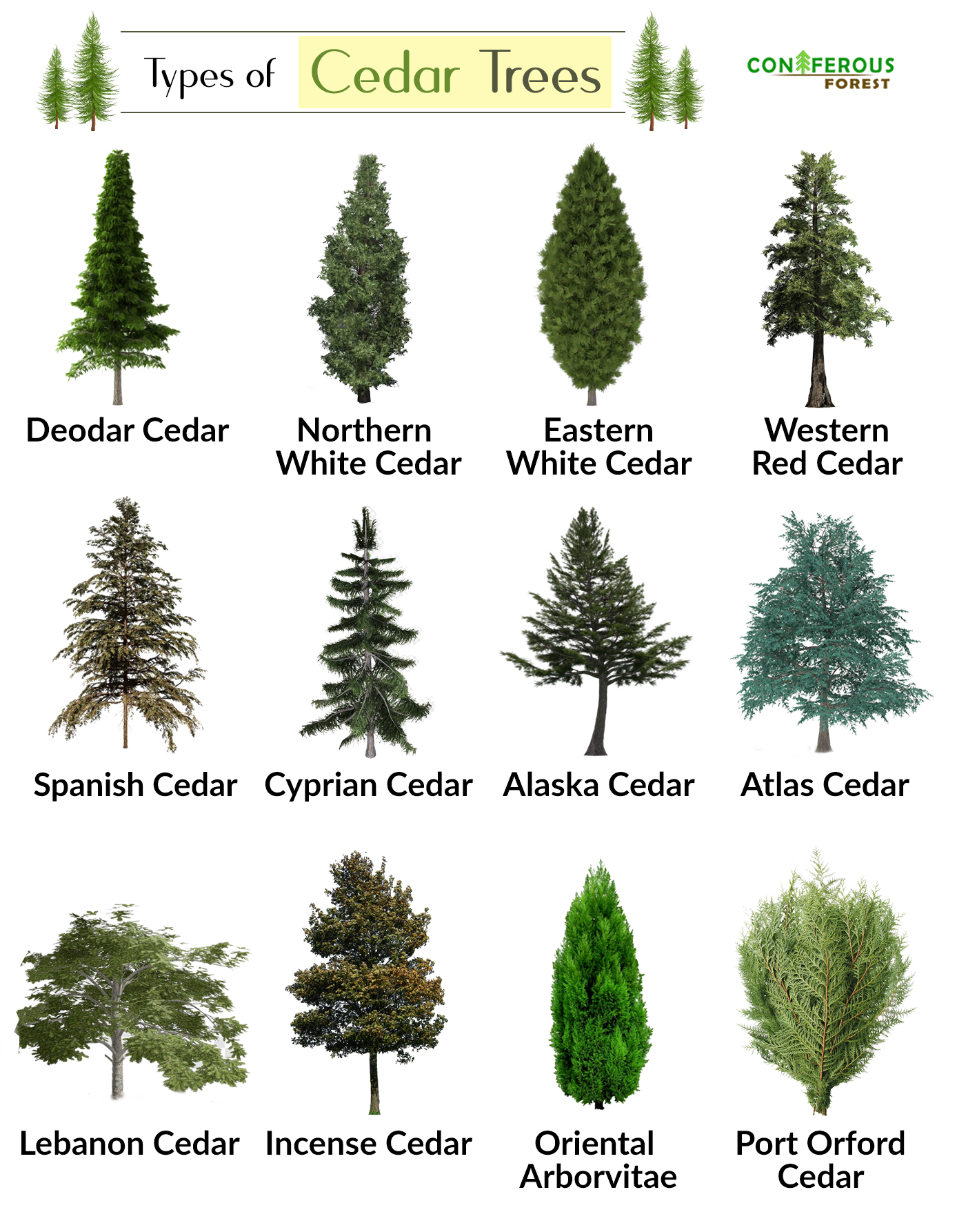
In this image, we can see the species of cedars that exist:
Properties and Benefits of Cedar
Medicinal and Therapeutic Benefits
The cedar tree has been used since ancient times for its medicinal properties. The wood, bark, and essential oils are employed in natural treatments to relieve respiratory congestion and stress. Scientifically, its essential oil has been studied for its anti-inflammatory and antimicrobial properties, making it useful in the production of health and personal hygiene products.

The Cedar in Industry: Applications in Furniture and Construction
Cedar wood is highly valued in the furniture and construction industries due to its durability, resistance to rot, and aesthetic appeal. It is commonly used for making outdoor furniture, building siding, and structures that require weather resistance.
Contributions to Environmental Sustainability
The use of cedar wood in construction and other industries also contributes to environmental sustainability. As a renewable resource, when well managed, it promotes sustainable forestry practices that benefit the environment. Furthermore, due to its long durability, cedar products have a longer lifespan, reducing the need for frequent replacement and decreasing waste.
Conservation and Care of the Cedar Tree
Impact of Climate Change
The climate change represents a significant threat to cedar trees, affecting their distribution and viability. Rising temperatures and changes in precipitation patterns can alter the habitats where these trees thrive, reducing their ability to reproduce and sustain their populations in the long term.
Common Diseases and Pests
The cedars are susceptible to various diseases and pests that can seriously compromise their health and survival. Root rot, caused by fungi, and attacks by insects such as the cedar beetle are common problems. Integrated pest management and regular monitoring are crucial to prevent and control these issues and ensure the health of these majestic trees.
Sustainable Practices and Reforestation
Adopting sustainable practices and promoting reforestation programs are essential for the conservation of cedar trees. These practices include responsible forest management, which ensures that timber harvesting does not exceed its natural regeneration rate. Reforestation, in turn, helps restore cedar forests that have been degraded or destroyed, strengthening the ecological resilience of these areas.

Frequently Asked Questions about the Cedar Tree
How long can a cedar tree live?
Cedars are known for their impressive longevity. Some species can live more than a thousand years under optimal conditions. The health of the tree, climate, and protection against pests and diseases are critical factors that influence their longevity.
What types of soil are ideal for cedar growth?
Cedar trees prefer well-drained, slightly acidic soils. Although they are relatively adaptable, the ideal soil should be fertile and maintain moderate moisture to promote healthy growth.
Do cedar trees require a lot of maintenance?
Not necessarily. Cedars require relatively low maintenance once established. However, it is crucial to provide them with enough space to grow both in height and root spread, and to perform occasional pruning to maintain their shape and health.
Is cedar resistant to pests?
Although cedar has some natural resistance to pests, it is not immune. Pests such as the cedar beetle and various types of fungi can affect it, especially if the tree is stressed or in suboptimal conditions.
Can any type of cedar be used for furniture or construction?
Some cedar species are better suited for carpentry and construction work due to their resistance to rot and aesthetic appeal. Western red cedar, for example, is highly valued in the furniture and construction industries.
How does cedar contribute to biodiversity?
The cedar plays an important role in its ecosystem by providing habitat and food for various species of wildlife. Its dense foliage offers shelter, while the cones serve as food for birds and small mammals.
What is the best time of year to plant a cedar tree?
Autumn is generally considered the best time to plant cedars, as the cooler weather and autumn rains help establish the tree’s root system before summer arrives.
Are there specific environmental benefits to planting cedar trees?
Yes, cedars help improve air quality by capturing pollutant particles and producing oxygen. Additionally, their dense canopy and root system help control soil erosion and increase water retention, significantly contributing to the health of the ecosystem.
Conclusion
The Future of Cedar and Its Role in Our Environment
The future of the cedar tree largely depends on our ability to understand and mitigate the environmental impacts it faces, as well as our willingness to adopt a ecological awareness in our daily activities. Promoting respect and protection for these trees is not only vital for the health of our ecosystems, but also enriches our world, offering aesthetic, economic, and environmental benefits for future generations.