

In the day-to-day office routine, it’s easy to forget how our small actions can impact the environment. That’s why we share these 10 ecological actions you can practice while working. Discover how to contribute to caring for the planet from your workspace.
1. Reduce Paper Use and Choose Digital Options

Paper is still a widely used resource in offices, but it is often wasted. Opt for digital alternatives to take notes, send documents, or make presentations. Using applications like Google Drive or collaborative tools not only saves paper but also improves work efficiency.
2. Bring Your Own Reusable Bottle

Instead of buying plastic bottles every day, carry a reusable bottle. Not only will you avoid contributing to the plastic waste problem, but you will also save money. Small actions like this can make a big difference in reducing plastic waste.
3. Turn Off Electronic Devices When Not in Use

Did you know that devices in standby mode still consume energy? At the end of the day, turn off your computer, monitor, and any electrical equipment that is not needed. Besides reducing your environmental impact, you will also help lower the office electricity costs.
4. Use Efficient Lighting in Your Workspace

Lighting represents a significant part of an office’s energy consumption. Take advantage of natural light whenever possible and use LED bulbs, which consume less energy and have a longer lifespan. This is not only eco-friendly but also creates a more comfortable working environment.
5. Practice Recycling in the Office
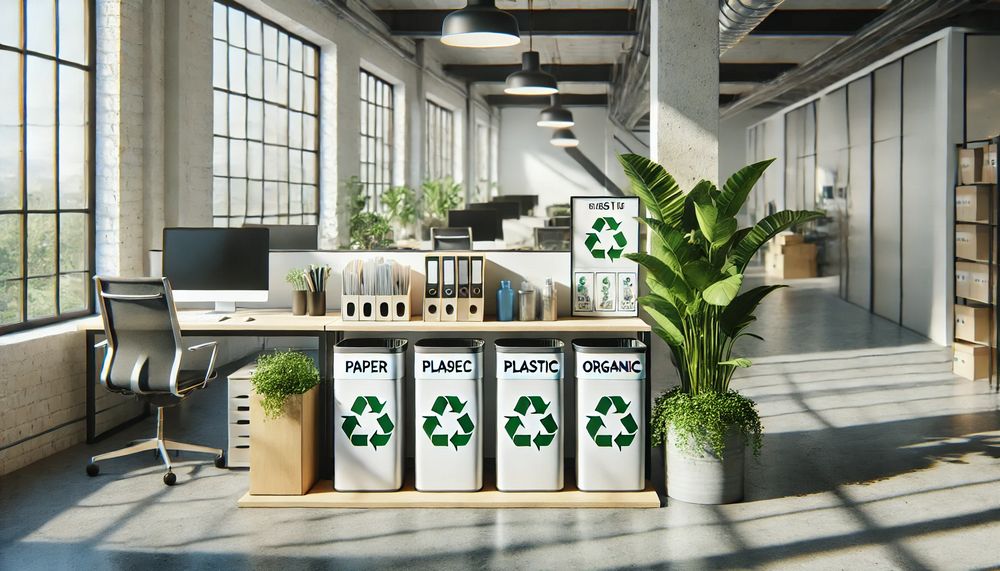
Make sure to separate waste correctly: paper, plastic, glass, and organic waste. If your office does not have a recycling system, suggest it! Recycling is a simple way to contribute to the environment and reduce the amount of waste that ends up in landfills.
6. Adjust the Air Conditioning to Save Energy

Air conditioning is one of the largest energy consumers in an office. Set the temperature to a comfortable but not excessive level. For example, keeping it between 75 and 79 degrees Fahrenheit is ideal for reducing energy consumption. A small adjustment can make a big impact both on the environment and on costs.
7. Choose Sustainable Transportation to Get to Work

Consider alternatives such as public transportation, carpooling with colleagues, or using a bicycle to get to the office. These options not only reduce carbon emissions but can also be more economical and healthier for you. Inspire others on your team to do the same!
8. Avoid Single-Use Plastic in Your Meals

If you bring your lunch to the office, use reusable containers instead of disposable plastic bags or containers. You can also opt for reusable cutlery and napkins. Avoiding single-use plastic is one of the best ways to reduce your environmental impact.
9. Share Resources with Your Coworkers

Instead of buying unnecessary materials or equipment, look for ways to share resources in the office. This includes everything from printers to stationery items. Sharing not only promotes savings, but also helps create a more collaborative and sustainable environment.
10. Promote Ecological Initiatives Within Your Team

Be a leader in sustainability within your office. Organize talks, workshops, or small challenges to encourage eco-friendly habits among your colleagues. You can even propose one day a month for activities such as community cleanups or creating a composting system for organic waste.
How Does the Paper Recycling Process Work in Offices?
Paper recycling in offices is a simple practice that can have a significant impact on waste reduction. Here we explain the step-by-step process so you can implement it easily:
- Collection: Set up designated paper containers at strategic points in the office, such as near printers or desks.
- Classification: Separate clean paper (such as single-sided printed sheets) from other materials like cardboard, laminated papers, or those with adhesives.
- Storage: Once sorted, store the paper in a dry place to prevent damage or contamination.
- Delivery to recyclers: Contact local recycling companies to have the paper collected or find out about the nearest drop-off points.
- Transformation: In recycling plants, paper is processed to become new products such as notebooks, cardboard, or recycled paper.
This simple process not only contributes to waste reduction but also helps conserve natural resources such as water and trees. Get inspired to implement it in your office!
Tips to Reduce Your Carbon Footprint in the Office
Reducing your environmental impact in the office is easier than you think. Here are some practical tips:
- Take advantage of natural light: Work near windows to reduce the use of artificial lighting.
- Use efficient equipment: Choose devices with energy certification and set them to energy-saving mode.
- Reduce travel: Consider telecommuting or virtual meetings to avoid unnecessary trips.
- Choose sustainable products: Purchase recycled office supplies or those with eco-friendly certifications.
- Promotes waste reduction: Use reusable cups, plates, and utensils instead of disposable ones.
Environmental Impact of Sustainable Actions in the Office
| Sustainable Action | Positive Impact | Relevant Fact |
|---|---|---|
| Reduce paper use | Preserves natural resources like trees and water. | For every ton of recycled paper, 17 trees are saved and 26,500 liters of water are conserved. |
| Use LED bulbs | Reduces energy consumption by up to 80%. | LED bulbs last 25 times longer than incandescent bulbs. |
| Recycling paper and cardboard | Reduces landfill waste and carbon emissions. | Recycling 1 ton of paper prevents the emission of 900 kg of CO2. |
| Opt for sustainable transportation | Reduces air pollution and greenhouse gas emissions. | Using a bicycle instead of a car saves 240 g of CO2 per kilometer. |
| Avoid single-use plastics | Prevents the accumulation of waste in oceans and landfills. | Each year, 8 million tons of plastic end up in the oceans. |
Benefits of Creating an Ecological Culture at Work
Promoting an ecological culture in the office brings multiple benefits, both for the environment and the work team. It helps reduce operational costs, improves employee morale, and strengthens the corporate image as a responsible company. Additionally, small collective actions can generate a significant positive environmental impact.
Do you want to start today? Propose ideas like a paper-free day or a friendly competition to see who generates the least waste. Change begins with your initiative!


